- Published on
Pathology - Obstructive Sleep Apnea
Pathophysiology
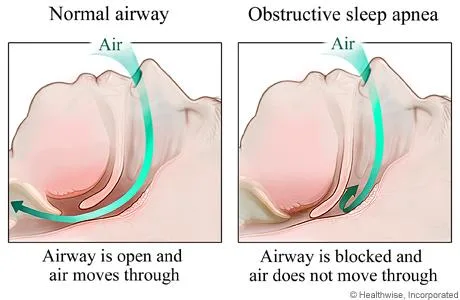
The blockage of pharyngeal airflow during a reclined sleep is the etiology of this condition. Patients with this condition frequently have enormous neck circumferences (17 inches or more), and many of them are obese. If the oropharynx is examined, a lot of tonsillar tissue may be present. During sleep, this tissue can fall back and restrict the tracheal airflow. Patients really have several apnea episodes during the course of the night, which contributes to their extreme daytime sleepiness. Hypercarbia (high amounts of retained carbon dioxide, in this case due to poor ventilation) is the result of ineffective ventilation brought on by airway blockage, and it is typically accompanied by decreased peripheral oxygen saturation. Systemic hypertension and pulmonary arterial hypertension are long-term sequelae that are believed to be caused by alterations in the arteriolar endothelium as a consequence of persistent hypercarbia. Mood swings, weight gain, inattentiveness, forgetfulness, or night sweats are other symptoms.
Pathophysiology
The blockage of pharyngeal airflow during a reclined sleep is the etiology of this condition. Patients with this condition frequently have enormous neck circumferences (17 inches or more), and many of them are obese. If the oropharynx is examined, a lot of tonsillar tissue may be present. During sleep, this tissue can fall back and restrict the tracheal airflow. Patients really have several apnea episodes during the course of the night, which contributes to their extreme daytime sleepiness. Hypercarbia (high amounts of retained carbon dioxide, in this case due to poor ventilation) is the result of ineffective ventilation brought on by airway blockage, and it is typically accompanied by decreased peripheral oxygen saturation. Systemic hypertension and pulmonary arterial hypertension are long-term sequelae that are believed to be caused by alterations in the arteriolar endothelium as a consequence of persistent hypercarbia. Mood swings, weight gain, inattentiveness, forgetfulness, or night sweats are other symptoms.
0 Comments
