- Published on
Pathology - Obstructive Sleep Apnea
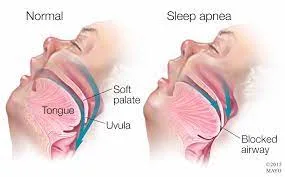
The hallmark of obstructive sleep apnea (OSA) is the patient's upper airway being functionally blocked for brief intervals during sleep. These pauses, or apnea moments, typically last 10 seconds or longer, and they cause a brief awakening from sleep as well as a drop in arterial oxygen saturation. Most of the time, patients are unaware of these disruptions while they are asleep, but they frequently wake up from a good night's sleep feeling lethargic and experiencing excessive daytime sleepiness for no apparent reason. Usually, if they snore loudly, their companion will also notice. Obese people are more likely to have OSA, which is commonly linked to hypertension. Although far less prevalent, narcolepsy also manifests as excessive daytime sleepiness and the infiltration of REM sleep elements during wakeful hours during the day. The most frequent symptoms are sleep attacks, which cause a patient to lose consciousness and fall asleep for prolonged intervals of 10 to 20 minutes. These can include cataplexy, a sudden decrease of muscular tone that can result in collapse from paralysis of all skeletal muscles, and they can happen at highly inopportune moments, including when driving. Inadequate sleep, jet lag, shift work (which throws off circadian rhythms), and restless legs syndrome are among factors that can cause daytime sleepiness.
The hallmark of obstructive sleep apnea (OSA) is the patient's upper airway being functionally blocked for brief intervals during sleep. These pauses, or apnea moments, typically last 10 seconds or longer, and they cause a brief awakening from sleep as well as a drop in arterial oxygen saturation. Most of the time, patients are unaware of these disruptions while they are asleep, but they frequently wake up from a good night's sleep feeling lethargic and experiencing excessive daytime sleepiness for no apparent reason. Usually, if they snore loudly, their companion will also notice. Obese people are more likely to have OSA, which is commonly linked to hypertension. Although far less prevalent, narcolepsy also manifests as excessive daytime sleepiness and the infiltration of REM sleep elements during wakeful hours during the day. The most frequent symptoms are sleep attacks, which cause a patient to lose consciousness and fall asleep for prolonged intervals of 10 to 20 minutes. These can include cataplexy, a sudden decrease of muscular tone that can result in collapse from paralysis of all skeletal muscles, and they can happen at highly inopportune moments, including when driving. Inadequate sleep, jet lag, shift work (which throws off circadian rhythms), and restless legs syndrome are among factors that can cause daytime sleepiness.
0 Comments
