- Published on
Pathology - Open Angle Glaucoma
Pathogenesis
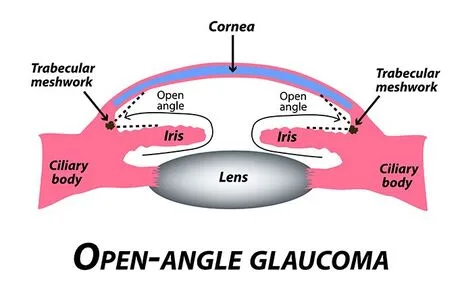
The trabecular meshwork, which typically serves to drain intraocular fluid from the anterior chamber, is obstructed in this kind of glaucoma. The aqueous humor produced by the ciliary body persists and builds up in the anterior chamber, raising intraocular pressure. This is not painful, unlike acute angle-closure glaucoma, as it happens gradually. Damage to the optic nerve as a result increases the disc to cup ratio and impairs vision from the peripheral to the central nervous system. Venous vessel engorgement manifests as vessels with notches on the outside edge of the optic disc. Topical beta-blockers and oral carbonic anhydrase inhibitors can be used to reduce the generation of aqueous humor, whereas topical prostaglandins can be used in treatment to enhance outflow via the trabecular meshwork.
0 Comments
