- Published on
Pathology - Organ Rejection
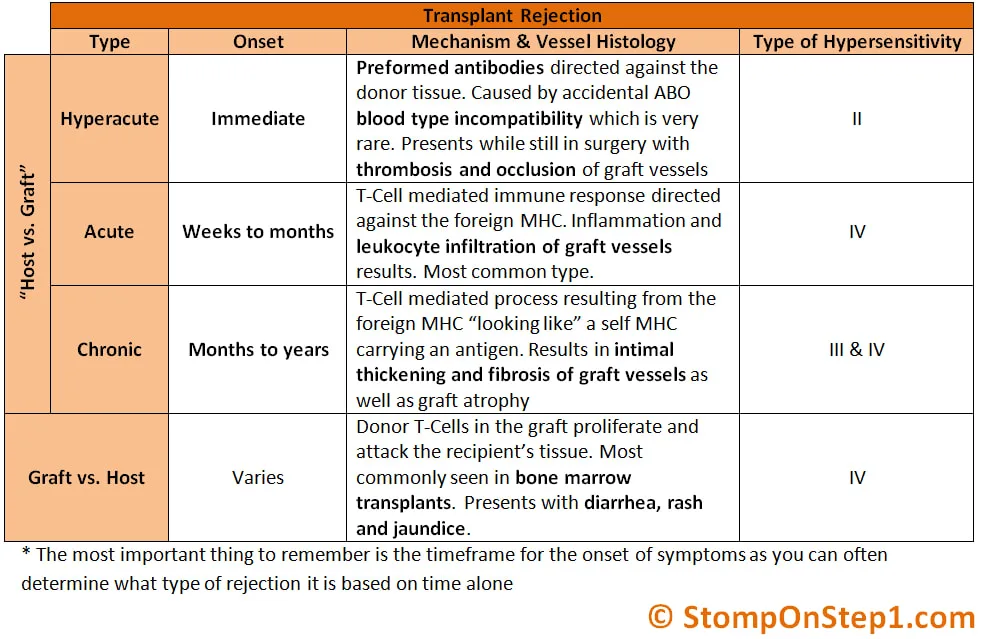
Preformed anti-donor antibodies (such as anti-blood-type antibodies) in the recipient's bloodstream are the cause of hyperacute rejection.
Class I MHC-induced cytotoxic T-cell response is the cause of acute rejection.
Rejection that is persistent: Both antibody- and cell-mediated graft deterioration might result from prolonged immunosuppressive therapy, previous acute rejection, or co-morbidities between the donor and the recipient.
Graft-versus-host disease (GVHD): In immunocompromised recipients, grafted T-cells multiply and assault recipient host cells.
Pathology
Hyperacute: fibrin-platelet thrombi, neutrophilic infiltration, and cyanosis of the graft with necrosis.
Acute: Necrotizing vasculitis with enlarged endothelial cells and thrombosis; interstitial mononuclear infiltration with edema and hemorrhage.
Chronic: Intimal fibrosis of the graft arteries and tissue, resulting in ischemia injury and graft atrophy.
GVHD: Inflammatory harm to the GI tract, skin, liver, and immune system.
Clinical Signs and Symptoms
Hyperacute: Develops minutes to hours following transplant.
Acute: Happens over the first six months following transplant.
Chronic: Begins several months to years following transplant.
GVHD symptoms include diarrhea, liver damage, and maculopapular rash.
Handling
Both chronic and hyperacute: irreversible.
Acute: Reversible with immunosuppressive medication (cyclosporine, for example).
GVHD: Use monoclonal grafts or antithymocyte globulin on donor tissue, as well as immunosuppressive medications (such as tacrolimus and cyclosporine).
Preformed anti-donor antibodies (such as anti-blood-type antibodies) in the recipient's bloodstream are the cause of hyperacute rejection.
Class I MHC-induced cytotoxic T-cell response is the cause of acute rejection.
Rejection that is persistent: Both antibody- and cell-mediated graft deterioration might result from prolonged immunosuppressive therapy, previous acute rejection, or co-morbidities between the donor and the recipient.
Graft-versus-host disease (GVHD): In immunocompromised recipients, grafted T-cells multiply and assault recipient host cells.
Pathology
Hyperacute: fibrin-platelet thrombi, neutrophilic infiltration, and cyanosis of the graft with necrosis.
Acute: Necrotizing vasculitis with enlarged endothelial cells and thrombosis; interstitial mononuclear infiltration with edema and hemorrhage.
Chronic: Intimal fibrosis of the graft arteries and tissue, resulting in ischemia injury and graft atrophy.
GVHD: Inflammatory harm to the GI tract, skin, liver, and immune system.
Clinical Signs and Symptoms
Hyperacute: Develops minutes to hours following transplant.
Acute: Happens over the first six months following transplant.
Chronic: Begins several months to years following transplant.
GVHD symptoms include diarrhea, liver damage, and maculopapular rash.
Handling
Both chronic and hyperacute: irreversible.
Acute: Reversible with immunosuppressive medication (cyclosporine, for example).
GVHD: Use monoclonal grafts or antithymocyte globulin on donor tissue, as well as immunosuppressive medications (such as tacrolimus and cyclosporine).
0 Comments
