- Published on
Pathology - Ovarian Cysts
Follicular (F) cyst linked to hyperestrinism and endometrial hyperplasia, commonly causing ovarian enlargement, typically detected during menstrual years.
Corpus luteum (CL) cysts are typically identified during the reproductive years.
Theca-lutein (TL) cyst is linked to choriocarcinoma, hydatidiform moles, and clomiphene treatment.
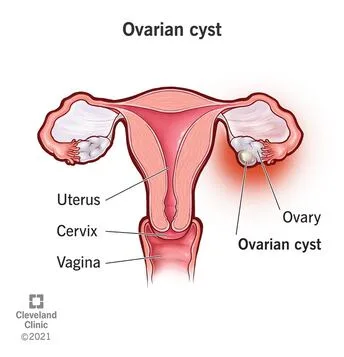
Follicle distention is frequently bilateral and involves an unruptured Graafian follicle bordered by granulosa cells.
CL: Typically one-sided; filled with transparent fluid; surrounded by yellow luteal cells containing lipid droplets in the cytoplasm; may experience bleeding into an existing mature corpus luteum.
TL: Frequently occurring on both sides and in several locations; surrounded by luteinized theca cells.
Symptoms may vary from being asymptomatic to experiencing pelvic pressure/pain or nonspecific gastrointestinal discomfort.
F: Non-menstrual pain.
CL: Menstrual cycle delay.
TL: Absence of menstruation.
Lab results show higher levels of hCG due to trophoblastic proliferation.
Frequently resolves after a 2-month course of oral contraceptives; monitor with repeated ultrasounds and consider surgical removal if it persists.
CL and TL: Cyst excision or unilateral oophorectomy.
Follicular (F) cyst linked to hyperestrinism and endometrial hyperplasia, commonly causing ovarian enlargement, typically detected during menstrual years.
Corpus luteum (CL) cysts are typically identified during the reproductive years.
Theca-lutein (TL) cyst is linked to choriocarcinoma, hydatidiform moles, and clomiphene treatment.
Follicle distention is frequently bilateral and involves an unruptured Graafian follicle bordered by granulosa cells.
CL: Typically one-sided; filled with transparent fluid; surrounded by yellow luteal cells containing lipid droplets in the cytoplasm; may experience bleeding into an existing mature corpus luteum.
TL: Frequently occurring on both sides and in several locations; surrounded by luteinized theca cells.
Symptoms may vary from being asymptomatic to experiencing pelvic pressure/pain or nonspecific gastrointestinal discomfort.
F: Non-menstrual pain.
CL: Menstrual cycle delay.
TL: Absence of menstruation.
Lab results show higher levels of hCG due to trophoblastic proliferation.
Frequently resolves after a 2-month course of oral contraceptives; monitor with repeated ultrasounds and consider surgical removal if it persists.
CL and TL: Cyst excision or unilateral oophorectomy.
0 Comments
