- Published on
Pathology - Pelvic Inflammatory Disease
Common causes are Chlamydia trachomatis (subacute), Neisseria gonorrhoeae (acute), Gardnerella vaginalis, and Trichomonas vaginalis.
Typically seen in young women who have not given birth and are sexually active with several partners.
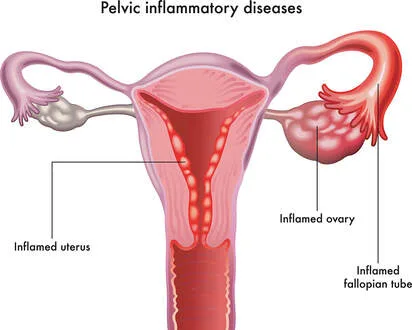
The Fallopian tubes exhibit swelling of the outer layer with fibrin covering, pus inside the tube, which can lead to the formation of a pyosalpinx or a hydrosalpinx.
Infection can also affect the ovaries and other pelvic structures.
Symptoms include high fever, lower abdomen pain, cervical motion soreness (chandelier sign), purulent cervical discharge, and right upper quadrant (RUQ) pain indicating perihepatitis (Fitz-Hugh-Curtis syndrome).
Sequelae of previous pelvic inflammatory disease (PID) may involve subsequent ectopic pregnancy, infertility, chronic pelvic pain, and adhesions.
Antibiotics are efficient against the organism that causes the infection.
Ectopic pregnancy commonly happens in the fallopian tubes but can also occur in the ovary, abdominal cavity, or cervix. Risk factors include of a history of salpingitis, endometriosis, or tubal ligation. Symptoms include abdominal pain occurring 6 weeks after the previous menstruation, vaginal bleeding, and increased levels of hCG, which are below the typical range for the stage of pregnancy.
Common causes are Chlamydia trachomatis (subacute), Neisseria gonorrhoeae (acute), Gardnerella vaginalis, and Trichomonas vaginalis.
Typically seen in young women who have not given birth and are sexually active with several partners.
The Fallopian tubes exhibit swelling of the outer layer with fibrin covering, pus inside the tube, which can lead to the formation of a pyosalpinx or a hydrosalpinx.
Infection can also affect the ovaries and other pelvic structures.
Symptoms include high fever, lower abdomen pain, cervical motion soreness (chandelier sign), purulent cervical discharge, and right upper quadrant (RUQ) pain indicating perihepatitis (Fitz-Hugh-Curtis syndrome).
Sequelae of previous pelvic inflammatory disease (PID) may involve subsequent ectopic pregnancy, infertility, chronic pelvic pain, and adhesions.
Antibiotics are efficient against the organism that causes the infection.
Ectopic pregnancy commonly happens in the fallopian tubes but can also occur in the ovary, abdominal cavity, or cervix. Risk factors include of a history of salpingitis, endometriosis, or tubal ligation. Symptoms include abdominal pain occurring 6 weeks after the previous menstruation, vaginal bleeding, and increased levels of hCG, which are below the typical range for the stage of pregnancy.
0 Comments
