- Published on
Pathology- Pleural Effusion
Pathophysiology
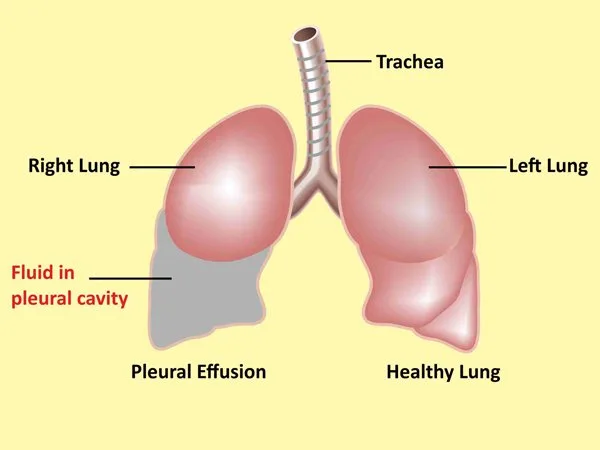
An abnormal buildup of fluid in the pleural space caused by either impaired absorption or excess fluid production is known as a pleural effusion. Effusions can result from "transudation" brought on by an imbalance between the hydrostatic and oncotic pressures in the chest, as in this instance of heart failure, or from "exudation" brought on by an inflammatory or viral cause. A low-protein fluid is produced by transudation, whereas a high-protein fluid is produced by exudation. Physical examinations frequently reveal dullness to percussion and reduced breath sounds. If there is enough fluid in the patient to prevent lung expansion or efficient diaphragmatic excursion, the patient may show signs of respiratory distress. If right-sided heart failure is evident, there may be jugular venous distention. In this patient, cardiomegaly suggests persistent heart disease. When a patient is seen on a chest radiograph while standing as opposed to lying down, pleural effusions can be seen as opacifications that "layer" or move with gravity.
Pathophysiology
An abnormal buildup of fluid in the pleural space caused by either impaired absorption or excess fluid production is known as a pleural effusion. Effusions can result from "transudation" brought on by an imbalance between the hydrostatic and oncotic pressures in the chest, as in this instance of heart failure, or from "exudation" brought on by an inflammatory or viral cause. A low-protein fluid is produced by transudation, whereas a high-protein fluid is produced by exudation. Physical examinations frequently reveal dullness to percussion and reduced breath sounds. If there is enough fluid in the patient to prevent lung expansion or efficient diaphragmatic excursion, the patient may show signs of respiratory distress. If right-sided heart failure is evident, there may be jugular venous distention. In this patient, cardiomegaly suggests persistent heart disease. When a patient is seen on a chest radiograph while standing as opposed to lying down, pleural effusions can be seen as opacifications that "layer" or move with gravity.
0 Comments
