- Published on
Pathology: Polycystic Ovarian Syndrome (Stein-Leventhal Syndrome)
The cause is uncertain, but it is thought that an imbalance of enzymes in androgen production may be triggered by elevated LH secretion, leading to an overproduction of androgens. This condition is linked to obesity, Cushing syndrome, congenital adrenal hyperplasia, genetic predisposition, and adrenal tumors that secrete androgens.
Prevalent endocrine condition that impacts 2%-5% of women in their reproductive years.
Pathophysiology: Elevated androgen levels lead to anovulation, the formation of numerous follicular cysts, and the proliferation of theca cells.
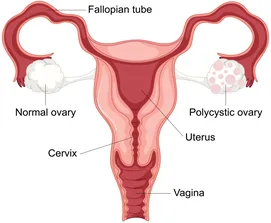
Ovaries are swollen with a thicker pearly white capsule and numerous cysts.
The cysts have a granulosa cell layer, luteinized theca cells, and cortical stromal fibrosis at a microscopic level.
Clinical Symptoms and Signs
Symptoms include amenorrhea or irregular menstruation, infertility, acne, obesity, hirsutism (in 70% of cases), insulin resistance leading to a higher risk of diabetes, virilism, and an increased risk of breast and endometrial cancer.
Laboratory results show elevated LH, reduced FSH, elevated testosterone levels, and signs of insulin resistance.
Treatment includes weight loss, oral contraceptives for cycle regulation in non-conceiving patients, metformin for insulin resistance, gonadotropin analogs, and ovulation induction with clomiphene.
The cause is uncertain, but it is thought that an imbalance of enzymes in androgen production may be triggered by elevated LH secretion, leading to an overproduction of androgens. This condition is linked to obesity, Cushing syndrome, congenital adrenal hyperplasia, genetic predisposition, and adrenal tumors that secrete androgens.
Prevalent endocrine condition that impacts 2%-5% of women in their reproductive years.
Pathophysiology: Elevated androgen levels lead to anovulation, the formation of numerous follicular cysts, and the proliferation of theca cells.
Ovaries are swollen with a thicker pearly white capsule and numerous cysts.
The cysts have a granulosa cell layer, luteinized theca cells, and cortical stromal fibrosis at a microscopic level.
Clinical Symptoms and Signs
Symptoms include amenorrhea or irregular menstruation, infertility, acne, obesity, hirsutism (in 70% of cases), insulin resistance leading to a higher risk of diabetes, virilism, and an increased risk of breast and endometrial cancer.
Laboratory results show elevated LH, reduced FSH, elevated testosterone levels, and signs of insulin resistance.
Treatment includes weight loss, oral contraceptives for cycle regulation in non-conceiving patients, metformin for insulin resistance, gonadotropin analogs, and ovulation induction with clomiphene.
0 Comments
