- Published on
Pathology - Primary Biliary Cirrhosis
Pathophysiology
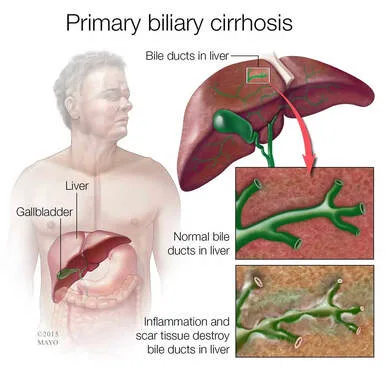
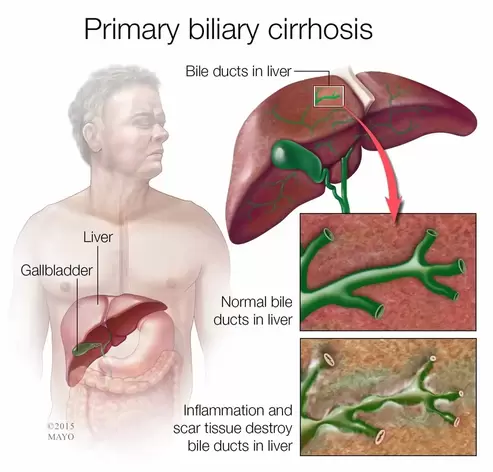
About 90% of patients with this autoimmune disease are female, and their average age at diagnosis is 50 years old. When it comes to AMAs that target pyruvate dehydrogenase complexes, 95% of patients test positive. Similar to other traditional autoimmune disorders, environmental stimuli like viruses can offer chemical mimics that elicit an immune response. T-cell-mediated bile duct death is made possible by antibodies against a ubiquitous mitochondrial protein that particularly target biliary epithelial cells for unexplained reasons. The reason for the disproportionate rise in alkaline phosphatase over indicators of hepatic injury such aminotransferases is the unique involvement of biliary epithelial cells. The illness progresses naturally and takes months to years to lead to end-stage liver disease and cirrhosis. Though the exact source of the itching is unknown, cholestatic liver disorders in general and PBC in particular frequently exhibit it. Theories include endogenous opioids or bile acid accumulation.
Pathophysiology
About 90% of patients with this autoimmune disease are female, and their average age at diagnosis is 50 years old. When it comes to AMAs that target pyruvate dehydrogenase complexes, 95% of patients test positive. Similar to other traditional autoimmune disorders, environmental stimuli like viruses can offer chemical mimics that elicit an immune response. T-cell-mediated bile duct death is made possible by antibodies against a ubiquitous mitochondrial protein that particularly target biliary epithelial cells for unexplained reasons. The reason for the disproportionate rise in alkaline phosphatase over indicators of hepatic injury such aminotransferases is the unique involvement of biliary epithelial cells. The illness progresses naturally and takes months to years to lead to end-stage liver disease and cirrhosis. Though the exact source of the itching is unknown, cholestatic liver disorders in general and PBC in particular frequently exhibit it. Theories include endogenous opioids or bile acid accumulation.
0 Comments
