- Published on
Pathology - Primary Hyperparathyroidism
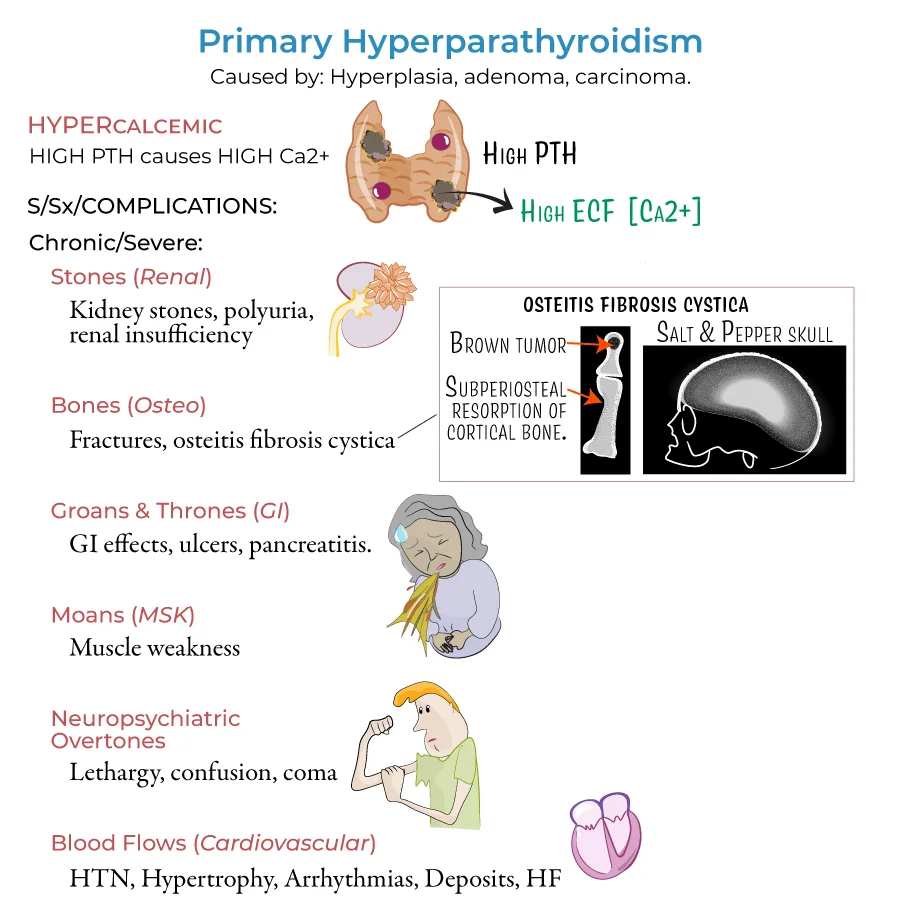
The signs and symptoms are related to how hypercalcemia manifests in the skeletal and urinary systems. People frequently employ the well-known acronym "bones, stones, abdominal groans, and psychiatric moans." The primary characteristic is elevated serum PTH and hypercalcemia. One parathyroid gland adenoma, located in over 80% of cases, is the cause of the illness. Similar symptoms characterize hypercalcemia associated with malignancy, which is brought on by PTH-related peptide (PTH-rp) secreted by tumors. There is feedback inhibition of endogenous PTH in these circumstances. Renal stone development is more likely in people with hypercalcemia. Loss of cortical bone commonly results in reduced bone density, which mostly affects the wrists and hips. PTH typically enhances renal calcium absorption; however, high calcium plasma concentrations also produce increased renal calcium filtration, which exceeds tubular reabsorptive capacity and results in hypercalciuria.
Low serum phosphate and elevated urine phosphate are caused by PTH's suppression of renal phosphate reabsorption. Because of the decreased activity of excitable tissues caused by hypercalcemia, bradycardia, first-degree heart block (in this instance), depressed reflexes, CNS symptoms, and decreased GI motility can all be explained. Nephrogenic DI is also brought on by hypercalcemia, which prevents vasopressin from acting at the kidney. In mild situations, high fluid intake and dietary calcium restriction are the main forms of treatment; in certain circumstances, surgical removal of one or more parathyroid glands is performed.
The signs and symptoms are related to how hypercalcemia manifests in the skeletal and urinary systems. People frequently employ the well-known acronym "bones, stones, abdominal groans, and psychiatric moans." The primary characteristic is elevated serum PTH and hypercalcemia. One parathyroid gland adenoma, located in over 80% of cases, is the cause of the illness. Similar symptoms characterize hypercalcemia associated with malignancy, which is brought on by PTH-related peptide (PTH-rp) secreted by tumors. There is feedback inhibition of endogenous PTH in these circumstances. Renal stone development is more likely in people with hypercalcemia. Loss of cortical bone commonly results in reduced bone density, which mostly affects the wrists and hips. PTH typically enhances renal calcium absorption; however, high calcium plasma concentrations also produce increased renal calcium filtration, which exceeds tubular reabsorptive capacity and results in hypercalciuria.
Low serum phosphate and elevated urine phosphate are caused by PTH's suppression of renal phosphate reabsorption. Because of the decreased activity of excitable tissues caused by hypercalcemia, bradycardia, first-degree heart block (in this instance), depressed reflexes, CNS symptoms, and decreased GI motility can all be explained. Nephrogenic DI is also brought on by hypercalcemia, which prevents vasopressin from acting at the kidney. In mild situations, high fluid intake and dietary calcium restriction are the main forms of treatment; in certain circumstances, surgical removal of one or more parathyroid glands is performed.
0 Comments
