- Published on
Pathology - Psoriasis
Although there have been theories regarding autoimmune processes and hereditary risk, the etiology is unknown.
Skin: Neutrophil clusters in the stratum corneum (Munro microabscesses) or the epidermis (spongiform pustules); thinning of the surface epidermis over dermal papillae, resulting in the proximity of dermal blood vessels to the surface; thin stratum granulosum with parakeratosis.
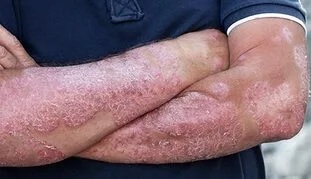
Described as a coral-colored plaque coated in silver scales that is typically found on the scalp, knees, and elbows; positive Auspitz sign, which is characterized by small regions of blood when scales are removed; nail discolouration or pitting with nail plate and nail bed separation.
linked to a higher risk of cardiovascular disease, myopathy, enteropathy, and psoriatic arthritis.
For severe cases, treatment options include methotrexate or other immunomodulators, topical corticosteroids, and exposure to UVB light.
Although there have been theories regarding autoimmune processes and hereditary risk, the etiology is unknown.
Skin: Neutrophil clusters in the stratum corneum (Munro microabscesses) or the epidermis (spongiform pustules); thinning of the surface epidermis over dermal papillae, resulting in the proximity of dermal blood vessels to the surface; thin stratum granulosum with parakeratosis.
Described as a coral-colored plaque coated in silver scales that is typically found on the scalp, knees, and elbows; positive Auspitz sign, which is characterized by small regions of blood when scales are removed; nail discolouration or pitting with nail plate and nail bed separation.
linked to a higher risk of cardiovascular disease, myopathy, enteropathy, and psoriatic arthritis.
For severe cases, treatment options include methotrexate or other immunomodulators, topical corticosteroids, and exposure to UVB light.
0 Comments
