- Published on
Pathology - Pulmonary Hypertension
Pathophysiology
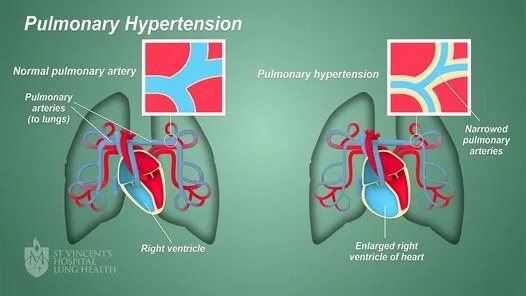
This disease is brought on by thickening and narrowing of the pulmonary arterioles, which raises pressure in the pulmonary artery system and impairs the right side of the heart's capacity to pump blood forward. Right-sided heart failure (cor pumonale) can develop from this increase in right-heart pressures, which also causes increased workload and chamber hypertrophy if left untreated. Patients frequently complain of dyspnea and increasing exhaustion. Palpitations and syncope are also frequent as heart output gradually decreases. The outward manifestations of right-sided heart failure include peripheral edema and elevated JVP. An higher pressure gradient across the valve as a result of elevated pulmonary artery pressure causes the loud S2. This is the outcome of an excessive closing of the pulmonary valve.
Pathophysiology
This disease is brought on by thickening and narrowing of the pulmonary arterioles, which raises pressure in the pulmonary artery system and impairs the right side of the heart's capacity to pump blood forward. Right-sided heart failure (cor pumonale) can develop from this increase in right-heart pressures, which also causes increased workload and chamber hypertrophy if left untreated. Patients frequently complain of dyspnea and increasing exhaustion. Palpitations and syncope are also frequent as heart output gradually decreases. The outward manifestations of right-sided heart failure include peripheral edema and elevated JVP. An higher pressure gradient across the valve as a result of elevated pulmonary artery pressure causes the loud S2. This is the outcome of an excessive closing of the pulmonary valve.
0 Comments
