- Published on
Pathology - Secondary Hypertension
Pathophysiology
It is secondary cause-related hypertension. Secondary hypertension is defined as raised blood pressure (systolic BP of >140 mm Hg or diastolic BP of >90 mm Hg) owing to a known cause, as opposed to primary/essential hypertension, which lacks a known cause. A hyperparathyroid condition may be the cause of secondary hypertension. Four parathyroid glands, which are found on the underside of the thyroid gland, produce PTH. PTH promotes calcium resorption in the distal nephron, releases calcium from the bone through osteoclastic stimulation (bone resorption), and boosts the conversion of active vitamin D to enhance calcium absorption from the gastrointestinal (GI) tract. Although the exact cause of this ailment is unknown, a considerable majority of individuals have hypertension as a result of the subsequent rise in serum calcium levels.
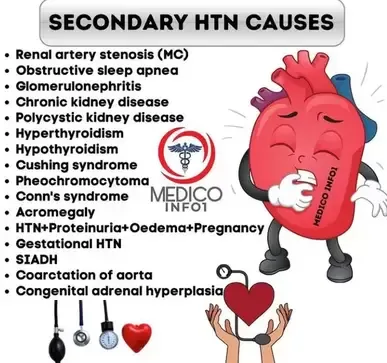
Hyperthyroidism, pharmaceutical use (NSAIDs, stimulants, decongestants, and other medications), aortic coarctation, hyperaldosteronism, hypercortisolism, and phaeochromocytoma are other known causes of hypertension. Compared to individuals with critical diseases, many patients with secondary hypertension present between the ages of 20 and 40.
Medication-assisted blood pressure control and repair of the underlying abnormalities causing the hypertension are both part of the treatment.
Pathophysiology
It is secondary cause-related hypertension. Secondary hypertension is defined as raised blood pressure (systolic BP of >140 mm Hg or diastolic BP of >90 mm Hg) owing to a known cause, as opposed to primary/essential hypertension, which lacks a known cause. A hyperparathyroid condition may be the cause of secondary hypertension. Four parathyroid glands, which are found on the underside of the thyroid gland, produce PTH. PTH promotes calcium resorption in the distal nephron, releases calcium from the bone through osteoclastic stimulation (bone resorption), and boosts the conversion of active vitamin D to enhance calcium absorption from the gastrointestinal (GI) tract. Although the exact cause of this ailment is unknown, a considerable majority of individuals have hypertension as a result of the subsequent rise in serum calcium levels.
Hyperthyroidism, pharmaceutical use (NSAIDs, stimulants, decongestants, and other medications), aortic coarctation, hyperaldosteronism, hypercortisolism, and phaeochromocytoma are other known causes of hypertension. Compared to individuals with critical diseases, many patients with secondary hypertension present between the ages of 20 and 40.
Medication-assisted blood pressure control and repair of the underlying abnormalities causing the hypertension are both part of the treatment.
0 Comments
