- Published on
Pathology - Secondary Hypertension
Pathophysiology
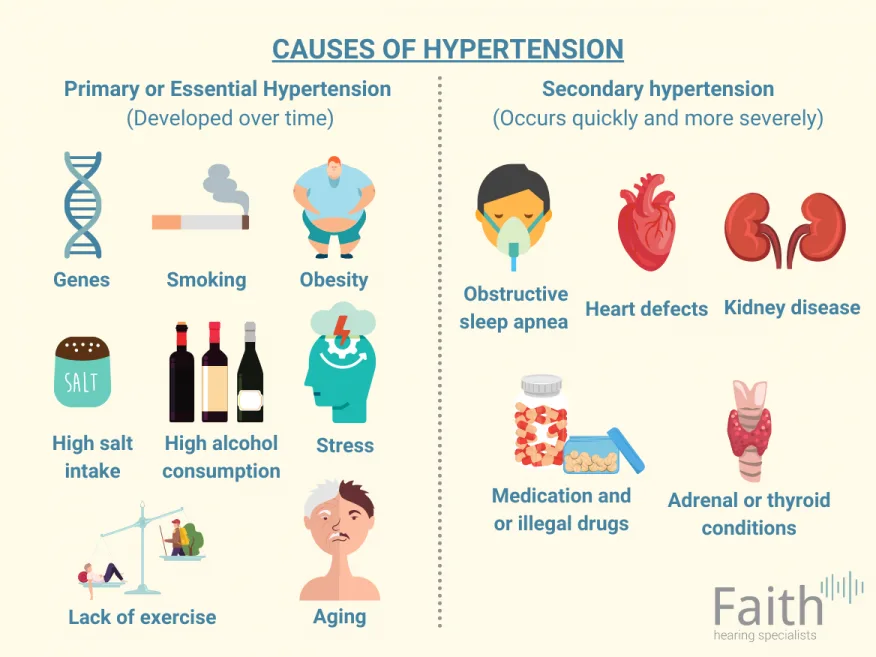
Like in this instance, secondary causes of hypertension usually present with a more sudden start, are more severe, and are more challenging to treat medically than essential hypertension. One significant factor that causes reduced renal blood flow and the activation of the renin-angiotensin-aldosterone pathway, which leads to salt and water retention, is stenosis of one or both renal arteries. The absence of bruit detected during auscultation is incompatible with this reason, and low renin levels and medical imaging both ruled it out. High aldosterone levels imply primary hyperaldosteronism (Conn syndrome), with renin levels regulated by negative feedback. Aldosterone stimulates renal tubular potassium and hydrogen ion release into the urine, which results in hypokalemia and alkalosis. When adenomas are less than 0.5 cm, like in this instance, they may not show up on CT imaging due to uncontrolled aldosterone secretion.
Primary hyperaldosteronism has multiple origins, such as idiopathic hyperaldosteronism, cancer, adrenal hyperplasia, and adenomas. Secretory masses are surgically excised, and aldosterone antagonists are used as a medicinal treatment for the latter.
Pathophysiology
Like in this instance, secondary causes of hypertension usually present with a more sudden start, are more severe, and are more challenging to treat medically than essential hypertension. One significant factor that causes reduced renal blood flow and the activation of the renin-angiotensin-aldosterone pathway, which leads to salt and water retention, is stenosis of one or both renal arteries. The absence of bruit detected during auscultation is incompatible with this reason, and low renin levels and medical imaging both ruled it out. High aldosterone levels imply primary hyperaldosteronism (Conn syndrome), with renin levels regulated by negative feedback. Aldosterone stimulates renal tubular potassium and hydrogen ion release into the urine, which results in hypokalemia and alkalosis. When adenomas are less than 0.5 cm, like in this instance, they may not show up on CT imaging due to uncontrolled aldosterone secretion.
Primary hyperaldosteronism has multiple origins, such as idiopathic hyperaldosteronism, cancer, adrenal hyperplasia, and adenomas. Secretory masses are surgically excised, and aldosterone antagonists are used as a medicinal treatment for the latter.
0 Comments
