- Published on
Pathology - Testicular Sex Cord–Gonadal Stroma Tumors
Primarily benign tumors originating from sex cord stroma.
Similar to Sertoli-Leydig cell ovarian cancers.
Typically observed in individuals aged 20 to 60.
Pathology
Leydig cell tumor is characterized by small yellowish-brown nodules made up of polygonal cells with eosinophilic cytoplasm and round nucleus. It also contains distinctive intracytoplasmic Reinke crystals, which are rod-shaped crystalloids. These tumors typically generate androgens and estrogens.
Sertoli cell tumor is a solid mass made up of tumor cells organized in trabeculae and cord structures resembling seminiferous tubules.
Clinical Symptoms and Signs
Testicular swelling or nodule that does not show light passing through during a flashlight examination.
Leydig cell tumors can cause early puberty in children or breast enlargement in adults.
Therapy
Treatment options include radiotherapy, chemotherapy, and radical inguinal orchectomy.
Testicular lymphomas make about 5% of testicular neoplasms and are the most prevalent type of testicular cancer in men over the age of 60.
Primarily benign tumors originating from sex cord stroma.
Similar to Sertoli-Leydig cell ovarian cancers.
Typically observed in individuals aged 20 to 60.
Pathology
Leydig cell tumor is characterized by small yellowish-brown nodules made up of polygonal cells with eosinophilic cytoplasm and round nucleus. It also contains distinctive intracytoplasmic Reinke crystals, which are rod-shaped crystalloids. These tumors typically generate androgens and estrogens.
Sertoli cell tumor is a solid mass made up of tumor cells organized in trabeculae and cord structures resembling seminiferous tubules.
Clinical Symptoms and Signs
Testicular swelling or nodule that does not show light passing through during a flashlight examination.
Leydig cell tumors can cause early puberty in children or breast enlargement in adults.
Therapy
Treatment options include radiotherapy, chemotherapy, and radical inguinal orchectomy.
Testicular lymphomas make about 5% of testicular neoplasms and are the most prevalent type of testicular cancer in men over the age of 60.
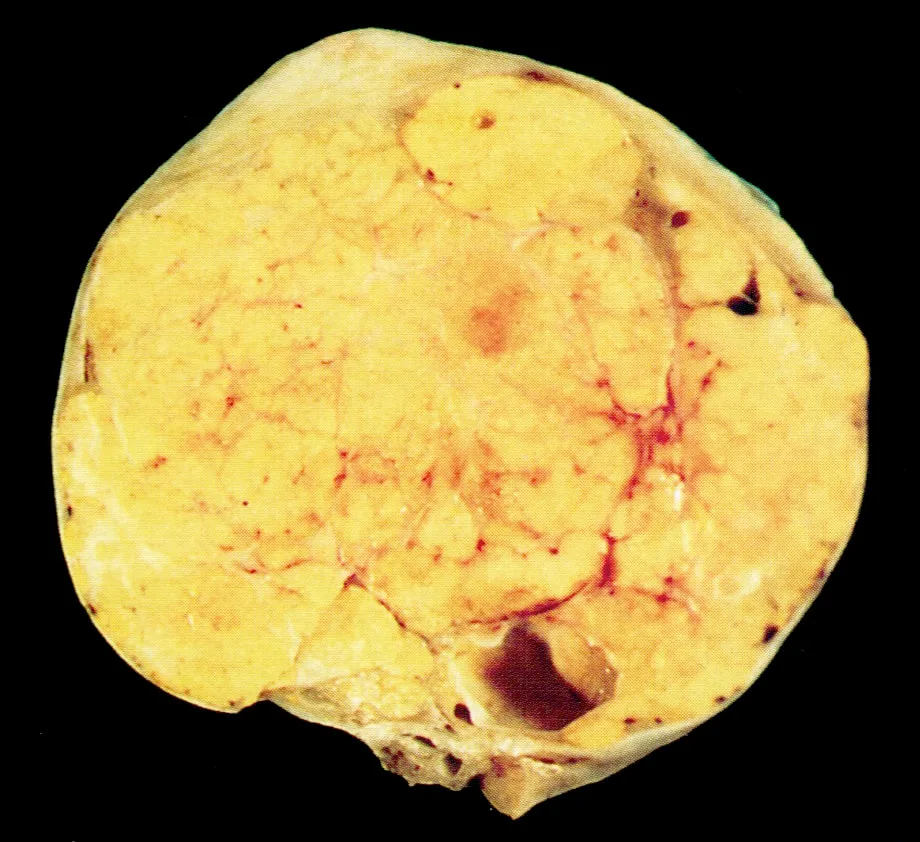
Sertoli Cell Tumor
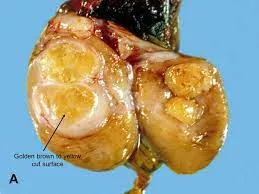
Leydig Cell Tumor
0 Comments
