- Published on
Pathology - Thromboembolic stroke in the cerebral arteries
Pathophysiology
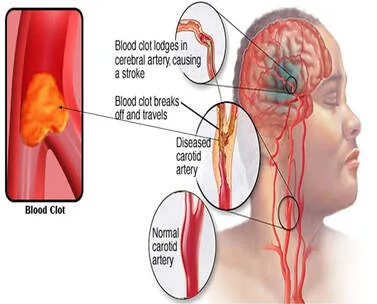
Due to the high rate of stimulation, the left atrium in this condition is unable to contract completely, which causes blood stasis within the atrial and increases the risk of thrombus formation. Either the cerebral or peripheral circulation may become embolize by the thrombus. Characteristic clinical manifestations of cerebral artery occlusion correspond to the ischemia-affected brain areas. A large portion of the left lateral cerebral cortex, including the area involved in vocal expression, is supplied by the left middle cerebral artery. Aphasia, facial and extremity paralysis, and contralateral paralysis are all possible outcomes of local ischemia. Because Broca's area is involved in this instance, the patient has expressive aphasia; she can understand but cannot speak. Early in the course of a stroke, gaze deviation toward the side of the lesion is possible. Interestingly, this patient's CHADS2 score of 2 indicates that she probably did not have an atrial fibrillation diagnosis earlier because she is not using an anticoagulant. It's critical to identify these people very away and start treating them right away.
Sustaining elevated or standard blood pressure is crucial in order to stop more tissue ischemia.
Pathophysiology
Due to the high rate of stimulation, the left atrium in this condition is unable to contract completely, which causes blood stasis within the atrial and increases the risk of thrombus formation. Either the cerebral or peripheral circulation may become embolize by the thrombus. Characteristic clinical manifestations of cerebral artery occlusion correspond to the ischemia-affected brain areas. A large portion of the left lateral cerebral cortex, including the area involved in vocal expression, is supplied by the left middle cerebral artery. Aphasia, facial and extremity paralysis, and contralateral paralysis are all possible outcomes of local ischemia. Because Broca's area is involved in this instance, the patient has expressive aphasia; she can understand but cannot speak. Early in the course of a stroke, gaze deviation toward the side of the lesion is possible. Interestingly, this patient's CHADS2 score of 2 indicates that she probably did not have an atrial fibrillation diagnosis earlier because she is not using an anticoagulant. It's critical to identify these people very away and start treating them right away.
Sustaining elevated or standard blood pressure is crucial in order to stop more tissue ischemia.
0 Comments
