- Published on
Pathology - Transitional Cell Carcinoma
Linked to smoking, alcohol consumption, exposure to aniline dyes, previous cyclophosphamide therapy, and phenacetin misuse.
Most prevalent among males over the age of 40.
The pathology of this condition ranges from flat to papillary and from noninvasive to invasive. It can develop in any part of the urinary tract system (renal calyces, renal pelvis, ureters, bladder) and may extend to adjacent tissue through local extension.
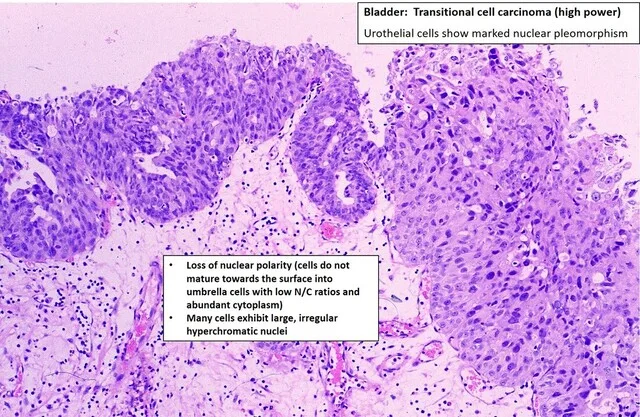
Microscopic examination reveals several stages of carcinoma, ranging from well-differentiated tumor cells similar to normal transitional cells to anaplastic tumor cells with large cells and numerous mitoses.
Typically manifests as painless blood in the urine; may also show signs of irritative voiding symptoms (if there is a concurrent infection), a detectable mass during a bimanual examination, enlarged liver, or swollen lymph nodes above the collarbone (if it has spread).
Treatment for bladder cancer may involve chemotherapy, radiation, transurethral resection, or radical cystectomy, as the cancer often recurs after removal.
Prognosis relies on the stage and grade of the condition.
Squamous cell carcinoma (SCC) of the bladder makes up 3%-7% of bladder malignancies in the United States and is linked to schistosomiasis and other factors causing persistent bladder infection.
Linked to smoking, alcohol consumption, exposure to aniline dyes, previous cyclophosphamide therapy, and phenacetin misuse.
Most prevalent among males over the age of 40.
The pathology of this condition ranges from flat to papillary and from noninvasive to invasive. It can develop in any part of the urinary tract system (renal calyces, renal pelvis, ureters, bladder) and may extend to adjacent tissue through local extension.
Microscopic examination reveals several stages of carcinoma, ranging from well-differentiated tumor cells similar to normal transitional cells to anaplastic tumor cells with large cells and numerous mitoses.
Typically manifests as painless blood in the urine; may also show signs of irritative voiding symptoms (if there is a concurrent infection), a detectable mass during a bimanual examination, enlarged liver, or swollen lymph nodes above the collarbone (if it has spread).
Treatment for bladder cancer may involve chemotherapy, radiation, transurethral resection, or radical cystectomy, as the cancer often recurs after removal.
Prognosis relies on the stage and grade of the condition.
Squamous cell carcinoma (SCC) of the bladder makes up 3%-7% of bladder malignancies in the United States and is linked to schistosomiasis and other factors causing persistent bladder infection.
0 Comments
