- Published on
Pathology - Various Esophageal Pathologies
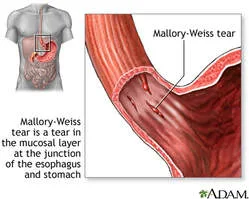
Mallory Weiss Tear
Etiology: Linear nontransmural tear develops at the gastrosophageal junction due to rapid changes in tansgastic pressure (from forcerul vomiting)
Clinical manifestations: Hematemesis after forceful retching
Treatment: Supportive treatment as needed; bleeding usually resolves spontaneously.
Mallory Weiss Tear
Etiology: Linear nontransmural tear develops at the gastrosophageal junction due to rapid changes in tansgastic pressure (from forcerul vomiting)
Clinical manifestations: Hematemesis after forceful retching
Treatment: Supportive treatment as needed; bleeding usually resolves spontaneously.
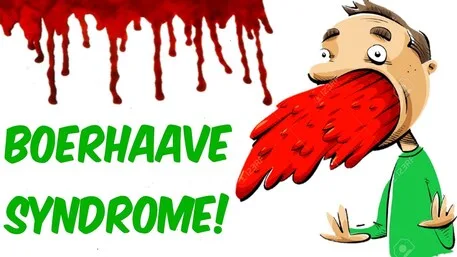
Boerhaave Syndrome is a medical condition characterized by a spontaneous rupture of the esophagus.
Cause: Complete rupture of the esophagus, typically occurring in the lower portion of the esophagus. caused by a sudden increase in pressure within the esophagus (resulting from vigorous vomiting).
Clinical signs include intense chest discomfort after recurrent episodes of vigorous vomiting, accompanied by fever, shock, and difficulty breathing. The chest X-ray reveals an enlargement of the area between the lungs, air in the mediastinum, and/or fluid accumulation in one of the pleural cavities.
Therapeutic intervention: Treatment options for the condition include the use of antibiotics, as well as surgical debridement and repair.
Cause: Complete rupture of the esophagus, typically occurring in the lower portion of the esophagus. caused by a sudden increase in pressure within the esophagus (resulting from vigorous vomiting).
Clinical signs include intense chest discomfort after recurrent episodes of vigorous vomiting, accompanied by fever, shock, and difficulty breathing. The chest X-ray reveals an enlargement of the area between the lungs, air in the mediastinum, and/or fluid accumulation in one of the pleural cavities.
Therapeutic intervention: Treatment options for the condition include the use of antibiotics, as well as surgical debridement and repair.
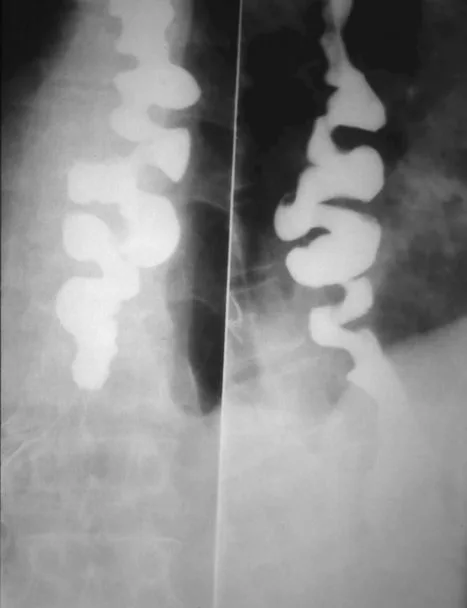
Diffuse Esophageal Spasm (DES) and Nutcracker Esophagus (NE)
Etiology: DES is characterized by simultaneous esophageal contractions that prevent the movement of food down the esophagus. On the other hand, NE involves extended and intensified contractions, but they occur in a coordinated manner, propelling the food bolus down the esophagus.
Clinical symptoms: Difficulty swallowing; discomfort in the chest; regurgitation of stomach acid.
Treatment options include the use of proton pump inhibitors to reduce acid production, as well as the administration of nifedipine or nitrates to promote relaxation of the esophageal muscle.
Etiology: DES is characterized by simultaneous esophageal contractions that prevent the movement of food down the esophagus. On the other hand, NE involves extended and intensified contractions, but they occur in a coordinated manner, propelling the food bolus down the esophagus.
Clinical symptoms: Difficulty swallowing; discomfort in the chest; regurgitation of stomach acid.
Treatment options include the use of proton pump inhibitors to reduce acid production, as well as the administration of nifedipine or nitrates to promote relaxation of the esophageal muscle.
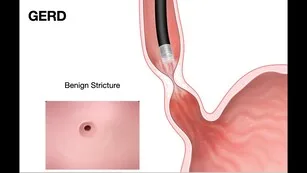
Benign Esophageal Stricture
Etiology: Benign deposition of scar tissue in area of prior inflammation of the submucosa; associated with prior esophageal insult (eg, acid reflux; radiation; prior direct esophageal injury).
Clinical manifestations: Dysphagia for solid foods.
Treatment : Endoscopic Balloon Dilation
Etiology: Benign deposition of scar tissue in area of prior inflammation of the submucosa; associated with prior esophageal insult (eg, acid reflux; radiation; prior direct esophageal injury).
Clinical manifestations: Dysphagia for solid foods.
Treatment : Endoscopic Balloon Dilation
0 Comments
