- Published on
Pathophysiology- Restrictive Cardiomyopathy
Pathophysiology
The patient's cardiomyopathy is restricted. The most common cause of this illness, which is characterized by a damaged heart and accompanying cardiac failure, is an invasive systemic disease like sarcoidosis or amyloidosis.
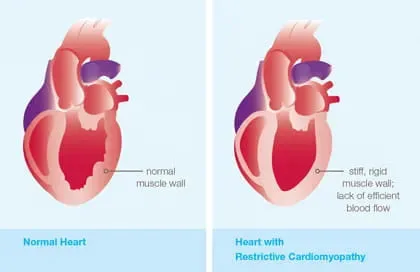
A "stiff" heart is caused by infiltration of cardiac tissue, and it may enlarge to make up for diminished muscle compliance.
Diastolic dysfunction, in which stiffened ventricles are unable to relax fully, results in inadequate diastolic filling, is linked to the majority of symptoms and poor perfusion. Patients typically develop symptoms over time, like in the vignette that is being provided. Common observations include fluid retention in the lungs and peripheral extremities due to the global infiltrative process, which affects both sides of the heart. The myocardium is trying to make up for less filling, as evidenced by the echocardiographic finding of four chamber hypertrophy. Stiff cardiac muscle causes a persistent rise in left ventricular filling pressure, which leads to pulmonary hypertension.
The patient's lower LV ejection fraction indicates a problem with systolic function. The goals of medical therapy are to eliminate extra fluid and lessen the strain on the heart. Sarcoidosis is one of the underlying medical problems that need ongoing therapy. The best course of action when medical therapy starts to fail is cardiac transplantation.
Pathophysiology
The patient's cardiomyopathy is restricted. The most common cause of this illness, which is characterized by a damaged heart and accompanying cardiac failure, is an invasive systemic disease like sarcoidosis or amyloidosis.
A "stiff" heart is caused by infiltration of cardiac tissue, and it may enlarge to make up for diminished muscle compliance.
Diastolic dysfunction, in which stiffened ventricles are unable to relax fully, results in inadequate diastolic filling, is linked to the majority of symptoms and poor perfusion. Patients typically develop symptoms over time, like in the vignette that is being provided. Common observations include fluid retention in the lungs and peripheral extremities due to the global infiltrative process, which affects both sides of the heart. The myocardium is trying to make up for less filling, as evidenced by the echocardiographic finding of four chamber hypertrophy. Stiff cardiac muscle causes a persistent rise in left ventricular filling pressure, which leads to pulmonary hypertension.
The patient's lower LV ejection fraction indicates a problem with systolic function. The goals of medical therapy are to eliminate extra fluid and lessen the strain on the heart. Sarcoidosis is one of the underlying medical problems that need ongoing therapy. The best course of action when medical therapy starts to fail is cardiac transplantation.
0 Comments
