- Published on
Surgery - Bariatric Surgery
Indications
severe obesity, in which treatment with medication and lifestyle modifications has not proven successful. The following BMI ranges are recommended by NICE or NIH: more than 40 kg/m2; or 35–40 kg/m2 with comorbidities associated with obesity (such as hypertension, Type II diabetes, hyperlipidemia, and obstructive sleep apnea).
Patients must agree to long-term follow-up, undergo multidisciplinary evaluation, be suitable for anesthesia, and comprehend the implications of surgery.
Contraindications include cirrhosis, chronic pancreatitis, inflammatory bowel disease, drug or alcohol addiction, and mental disorder.
Anatomy
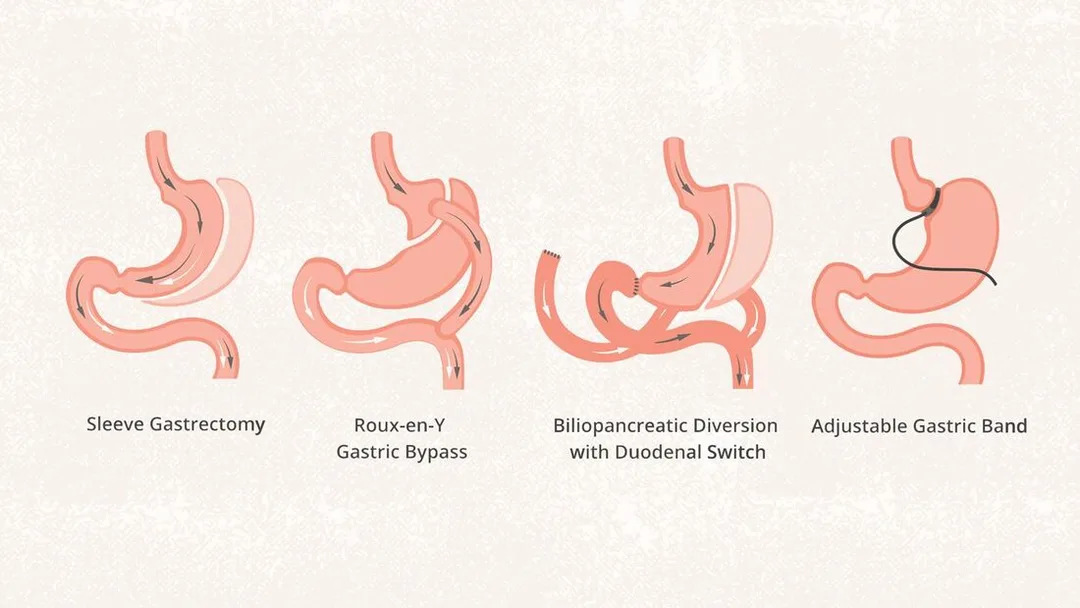
separated into malabsorptive, combination, and restrictive (limit intake) operations; however, the underlying mechanisms may be more intricate, such as decreased ghrelin production by the stomach fundus in sleeve gastrectomy.
Gastric restriction: Sleeve gastrectomy with laparoscopic adjustable gastric band.
Roux-en-Y gastric bypass restricts with some intestinal malabsorption.
Malabsorptive with several limitations: duodenal switch or biliopancreatic diversion.
Investigations
Pre-procedure: Dietician consultation, cardiac, endocrine, and mental evaluation, as well as a multidisciplinary workup. two weeks before surgery, a liquid diet to shrink the liver and make surgery easier Blood: iron, B12, folate, LFTs, lipids, TFT, FBC, and blood crossmatching.
Following the procedure: biliopancreatic diversion and gastric bypass Oral contrast testing to check for leaks (optional), consultation with a nutritionist, a liquid diet at first, gradually increasing, continuous vitamin and mineral supplements, monitoring, and follow-up.
Procedures
either laparoscopic or open.
Gastric band: A 15–20 ml pouch is created by wrapping an adjustable silicone band around the upper abdomen. Through a port in the subcutaneous tissue, saline inflation can be used to change the tightness of the band.
Roux-en-Y gastrojejunostomy: A 15–30 ml pouch is created by dividing the stomach in a Roux-en-Y gastric bypass, and it is linked to the jejunum.
Biliopancreatic diversion: A partial gastrectomy in which the stomach remnant is anastomosed to the distal ileum, which is the region of the ileocaecal valve where absorption takes place, between 50 and 100 cm away. By leaving the pylorus and the initial portion of the duodenum intact during the duodenal switch procedure, the risk of stomal ulcers and dumping syndrome is reduced.
Benefits: Loss of weight (gastric band: 50% extra weight can be removed, 70% for surgeries including malabsorptive procedures). decreased rates of certain cancers, diabetes, hypertension, overall mortality, increased mobility, and self-esteem are just a few of the comorbidities that can be reduced.
Many people need body contouring surgery to remove extra skin after losing weight.
Complications
Temporary: Infection, bleeding, anastomotic leaks, PE/DVT, arrhythmias, and 30-day mortality less than 1% are considered general.
Particulars: erosion, migration, and gastroband slippage.Symptoms of gastric reflux include overeating-related nausea and vomiting, ulcers, internal herniation, anddumping syndrome.
Long-range: Anastomotic stenosis, marginal ulceration, internal herniation, gallstones, malabsorption, neurological symptoms, bone demineralization, protein-calorie malnutrition, failure (of weight loss or weight regain, 5–10%), and nutritional deficiencies, such as those involving iron, calcium, fat-soluble vitamins, thiamine, B12, and copper
Indications
severe obesity, in which treatment with medication and lifestyle modifications has not proven successful. The following BMI ranges are recommended by NICE or NIH: more than 40 kg/m2; or 35–40 kg/m2 with comorbidities associated with obesity (such as hypertension, Type II diabetes, hyperlipidemia, and obstructive sleep apnea).
Patients must agree to long-term follow-up, undergo multidisciplinary evaluation, be suitable for anesthesia, and comprehend the implications of surgery.
Contraindications include cirrhosis, chronic pancreatitis, inflammatory bowel disease, drug or alcohol addiction, and mental disorder.
Anatomy
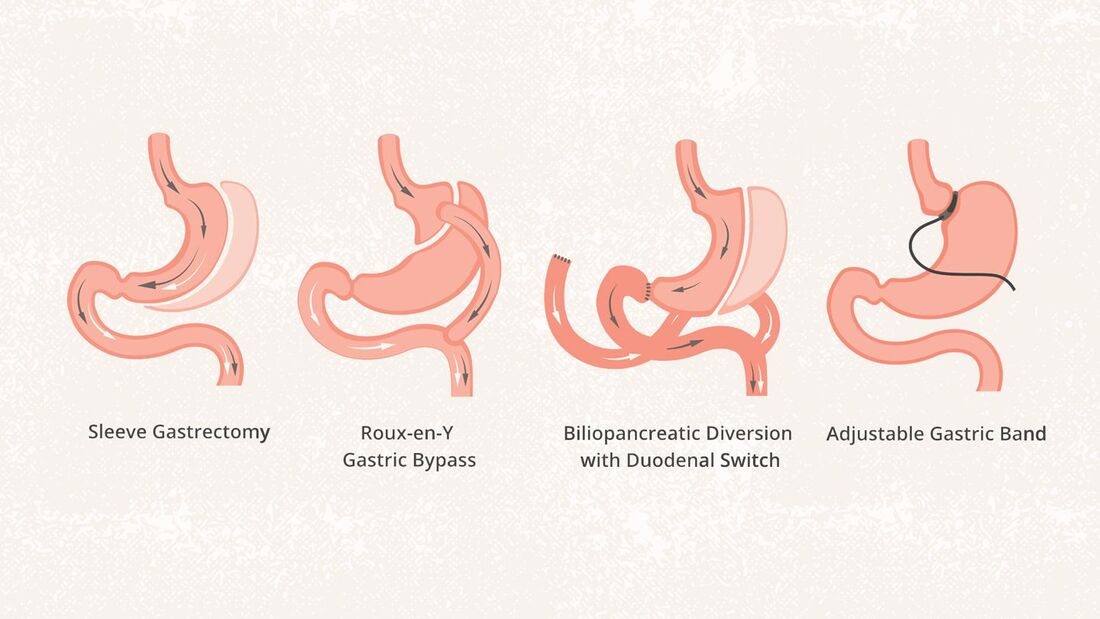
separated into malabsorptive, combination, and restrictive (limit intake) operations; however, the underlying mechanisms may be more intricate, such as decreased ghrelin production by the stomach fundus in sleeve gastrectomy.
Gastric restriction: Sleeve gastrectomy with laparoscopic adjustable gastric band.
Roux-en-Y gastric bypass restricts with some intestinal malabsorption.
Malabsorptive with several limitations: duodenal switch or biliopancreatic diversion.
Investigations
Pre-procedure: Dietician consultation, cardiac, endocrine, and mental evaluation, as well as a multidisciplinary workup. two weeks before surgery, a liquid diet to shrink the liver and make surgery easier Blood: iron, B12, folate, LFTs, lipids, TFT, FBC, and blood crossmatching.
Following the procedure: biliopancreatic diversion and gastric bypass Oral contrast testing to check for leaks (optional), consultation with a nutritionist, a liquid diet at first, gradually increasing, continuous vitamin and mineral supplements, monitoring, and follow-up.
Procedures
either laparoscopic or open.
Gastric band: A 15–20 ml pouch is created by wrapping an adjustable silicone band around the upper abdomen. Through a port in the subcutaneous tissue, saline inflation can be used to change the tightness of the band.
Roux-en-Y gastrojejunostomy: A 15–30 ml pouch is created by dividing the stomach in a Roux-en-Y gastric bypass, and it is linked to the jejunum.
Biliopancreatic diversion: A partial gastrectomy in which the stomach remnant is anastomosed to the distal ileum, which is the region of the ileocaecal valve where absorption takes place, between 50 and 100 cm away. By leaving the pylorus and the initial portion of the duodenum intact during the duodenal switch procedure, the risk of stomal ulcers and dumping syndrome is reduced.
Benefits: Loss of weight (gastric band: 50% extra weight can be removed, 70% for surgeries including malabsorptive procedures). decreased rates of certain cancers, diabetes, hypertension, overall mortality, increased mobility, and self-esteem are just a few of the comorbidities that can be reduced.
Many people need body contouring surgery to remove extra skin after losing weight.
Complications
Temporary: Infection, bleeding, anastomotic leaks, PE/DVT, arrhythmias, and 30-day mortality less than 1% are considered general.
Particulars: erosion, migration, and gastroband slippage.Symptoms of gastric reflux include overeating-related nausea and vomiting, ulcers, internal herniation, anddumping syndrome.
Long-range: Anastomotic stenosis, marginal ulceration, internal herniation, gallstones, malabsorption, neurological symptoms, bone demineralization, protein-calorie malnutrition, failure (of weight loss or weight regain, 5–10%), and nutritional deficiencies, such as those involving iron, calcium, fat-soluble vitamins, thiamine, B12, and copper
0 Comments
