- Published on
Surgery - Breast Abscess
Abscess in the breast
Introduction
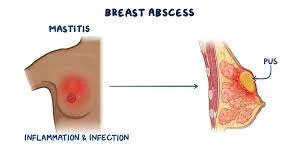
localized infection in which the breast tissue collects pus. Puerperal (lactational) and non-puerperal are the two basic types.
Etiology
Lactational stasis: An infection linked to milk stasis, usually caused by coagulase-negative Staphylococcus aureus bacteria.
Non-puerperal: anaerobes such as S. aureus and enterococci, frequently Bacteroides spp.; rare causes include TB and actinomycosis. Exclusions should be made for smoking, periductal mastitis/mammary duct ectasia, and related inflammatory breast cancer. Associated with diabetes, steroid medication, and wound infections following breast surgery.
Epidemiology
Breast abscesses caused by lactation are frequent and usually develop shortly after the breast is partially emptied, causing engorgement and stasis, throughout the weaning process. Non-lactational abscesses are more common in smokers and those between the ages of 30 and 60.
History
The patient reports pain and the emergence of an uncomfortable swelling in a breast area. She might report feeling sick and having a temperature.
Women who develop a non-puerperal abscess frequently have a history of prior infections, and their systemic disturbance is typically less.
Examination
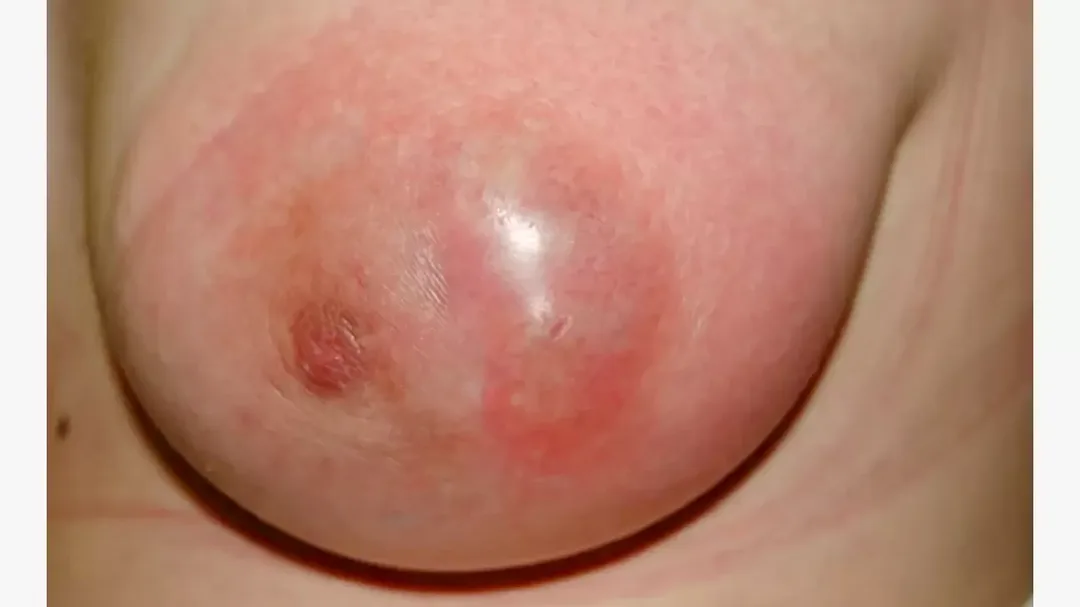
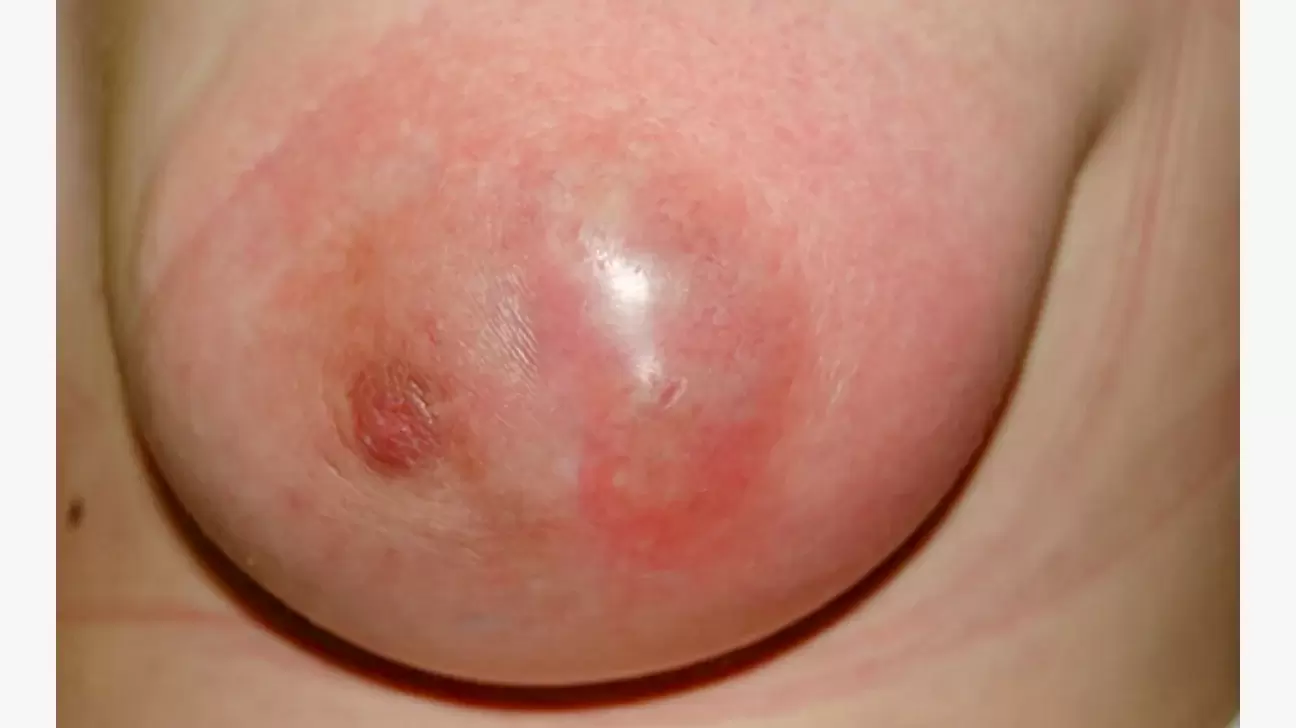
Local: There is swelling, warmth, and tenderness in the breast region. An inspection of the nipple may reveal fractures or fissures; the skin above it may be irritated. In non-puerperal cases, there can be indications of duct ectasia, such as nipple retraction, or scars or tissue distortion from prior occurrences.
Systemic: tachycardia, pyrexia.
Investigational studies
Imaging consists of ultrasound and aspiration for pus sample sensitivity, culture, and microscopy.
Management
Medical: Antibiotics can be used to treat early cellulitic phase abscesses (flucloxacillin for lactational abscesses, and metronidazole in non-puerperal abscesses). Often emptying your breasts to avoid milk stasis.
Operative: Breastfeeding mothers may benefit from daily needle aspiration covered with antibiotics.
Larger abscesses (>5 cm) are only appropriate for formal incision and drainage. Loculi are investigated and broken down; the incision should be cosmetically pleasing and allow for complete drainage. The incision can be sealed with primary closure or gently packed and kept open each day. Breastfeeding should proceed from the unaffected breast while the afflicted breast is emptied using a breast pump or by hand. suggestions for preventing cracked nipples.
Non-puerperal: Open drainage needs to be avoided or done with a tiny cut.
After the infection has subsided, the affected duct system should be excised as the last course of treatment.
Complications
sluggish wound healing, trouble nursing, unsatisfactory cosmetic result, and the development of mammary fistulas; necrosis of the skin above seldom occurs.
Prognosis
A breast abscess will eventually develop and discharge spontaneously onto the skin's surface if left untreated. Abscesses that are not puerperal often reoccur.
Abscess in the breast
Introduction
localized infection in which the breast tissue collects pus. Puerperal (lactational) and non-puerperal are the two basic types.
Etiology
Lactational stasis: An infection linked to milk stasis, usually caused by coagulase-negative Staphylococcus aureus bacteria.
Non-puerperal: anaerobes such as S. aureus and enterococci, frequently Bacteroides spp.; rare causes include TB and actinomycosis. Exclusions should be made for smoking, periductal mastitis/mammary duct ectasia, and related inflammatory breast cancer. Associated with diabetes, steroid medication, and wound infections following breast surgery.
Epidemiology
Breast abscesses caused by lactation are frequent and usually develop shortly after the breast is partially emptied, causing engorgement and stasis, throughout the weaning process. Non-lactational abscesses are more common in smokers and those between the ages of 30 and 60.
History
The patient reports pain and the emergence of an uncomfortable swelling in a breast area. She might report feeling sick and having a temperature.
Women who develop a non-puerperal abscess frequently have a history of prior infections, and their systemic disturbance is typically less.
Examination
Local: There is swelling, warmth, and tenderness in the breast region. An inspection of the nipple may reveal fractures or fissures; the skin above it may be irritated. In non-puerperal cases, there can be indications of duct ectasia, such as nipple retraction, or scars or tissue distortion from prior occurrences.
Systemic: tachycardia, pyrexia.
Investigational studies
Imaging consists of ultrasound and aspiration for pus sample sensitivity, culture, and microscopy.
Management
Medical: Antibiotics can be used to treat early cellulitic phase abscesses (flucloxacillin for lactational abscesses, and metronidazole in non-puerperal abscesses). Often emptying your breasts to avoid milk stasis.
Operative: Breastfeeding mothers may benefit from daily needle aspiration covered with antibiotics.
Larger abscesses (>5 cm) are only appropriate for formal incision and drainage. Loculi are investigated and broken down; the incision should be cosmetically pleasing and allow for complete drainage. The incision can be sealed with primary closure or gently packed and kept open each day. Breastfeeding should proceed from the unaffected breast while the afflicted breast is emptied using a breast pump or by hand. suggestions for preventing cracked nipples.
Non-puerperal: Open drainage needs to be avoided or done with a tiny cut.
After the infection has subsided, the affected duct system should be excised as the last course of treatment.
Complications
sluggish wound healing, trouble nursing, unsatisfactory cosmetic result, and the development of mammary fistulas; necrosis of the skin above seldom occurs.
Prognosis
A breast abscess will eventually develop and discharge spontaneously onto the skin's surface if left untreated. Abscesses that are not puerperal often reoccur.
0 Comments
