- Published on
Surgery - Colonic Volvulus
Introduction
intestinal blockage and possible ischaemia caused by the bowel's loop rotating around its mesentery axis. Adults typically experience symptoms in the sigmoid colon (65%) and caecum (30%).
Etiology
Anatomical factors include lengthy sigmoid mesentery, movable caecum, debility and chronic constipation, aging, high residue diet, tumor, adhesions, and colonic Chagas disease.
Epidemiology
Causes 5–10% of large bowel obstructions, which are more prevalent in older adults.
History
Vomiting after experiencing severe constipation, abdominal pain, and edema. There can be a history of earlier incidents that ended on their own.
Examination
Symptoms of intestinal obstruction, including pain and distension in the abdomen. Bowel noises are absent or tinkling.
Pathogenesis
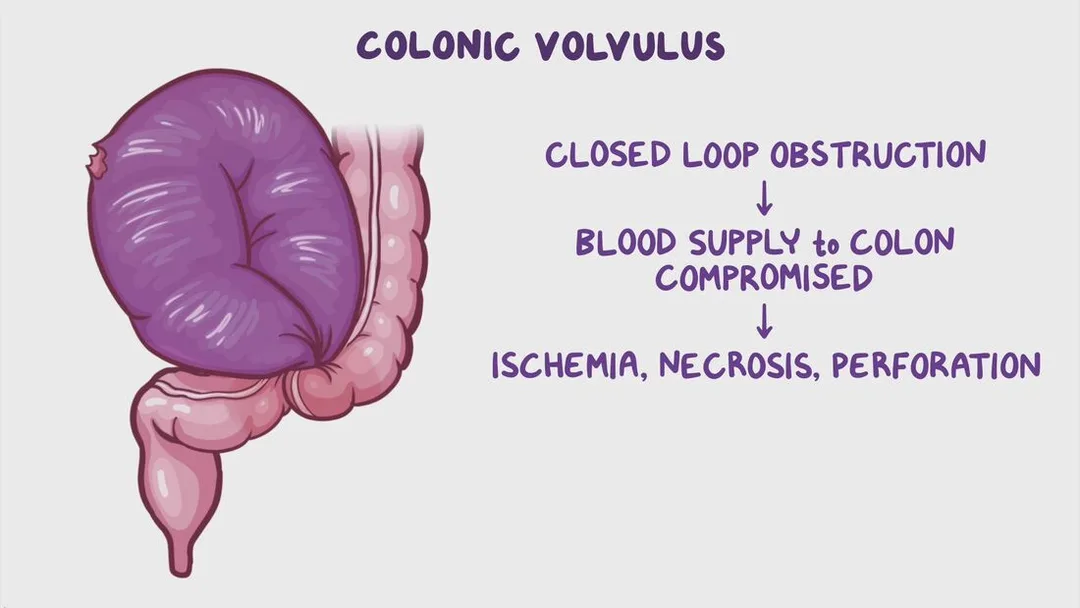
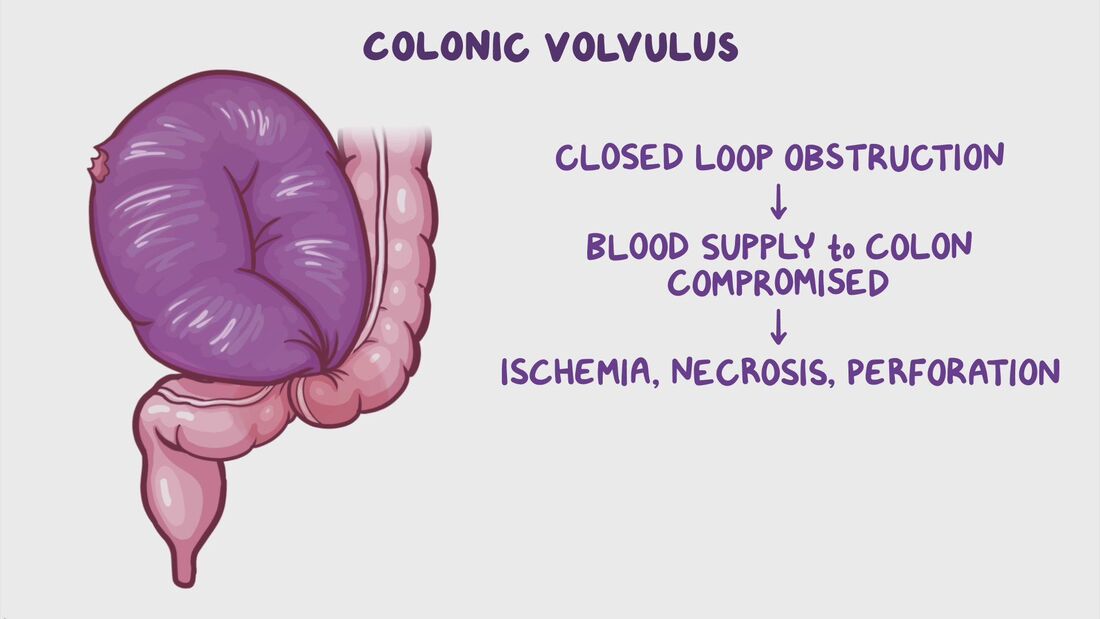
A partial or total closed loop obstruction is caused by the bowel segment rotating. The bowel's veins are crushed and obstructed by a 360-degree twist, which can cause circulation problems, gangrene, and perforation if left untreated.
Investigations
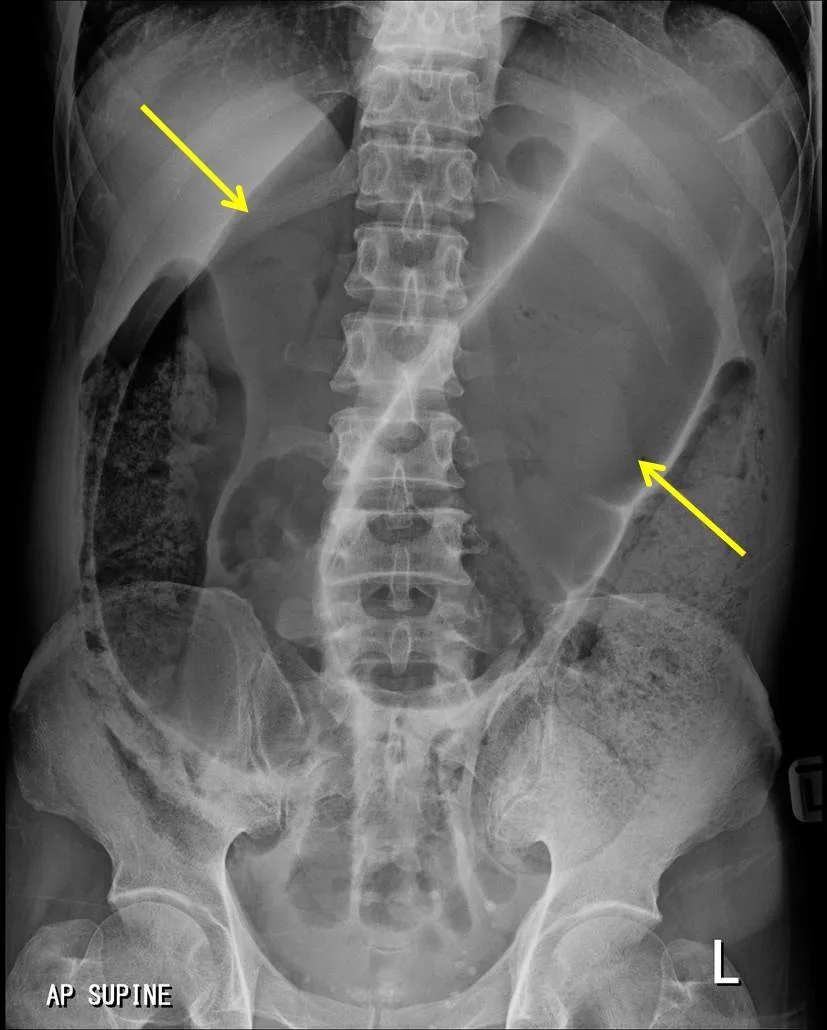
AXR: Widely expanded colon loop, maybe resembling a coffee bean. The coffee bean's concavity points to the left in sigmoid volvulus and to the right lower quadrant in caecal volvulus.
may be linked to distal collapse and proximally dilated colon loops.
Contrast enema soluble in water: indicates the location of the obstruction; in sigmoid volvulus, the distal bowel narrows spirally at the region of the deformity, resembling a bird's beak or ace of spades.
CT scan: Shows indications of intestinal ischaemia and rotation of the mesentery and colon.
Management
Resuscitations: IV fluids, NGtube if vomiting, nil by mouth, and IV antibiotics if there are signs of sepsis or ischaemia.
Endoscopic: Flexible sigmoidoscopic decompression or sigmoidoscopy combined with rectal tube insertion can be used to treat sigmoid volvulus. Patients with troublesome recurrent sigmoid volvulus who are unsuitable for surgery may undergo sigmoid fixation with endoscopic insertion of a percutaneous sigmoidostomy tube.
Surgical: Laparotomy, untwisting, excision of dilated, gangrenous, or ischemic colon, with either a primary anastomosis and/or stoma creation, if symptoms of peritonitis, bowel ischaemia, or failure of conservative therapies are present. Right hemicolectomy, caecopexy, ileocaecal resection, or caecal volvulus are the procedures used. An open or laparoscopic sigmoid colectomy can be used to treat recurrent sigmoid volvulus.
Complications
Bowel perforation, toxaemia, gangrene and ischaemia, and peritonitis.
Prognosis
Although sigmoid volvulus can be effectively managed conservatively or endoscopically, recurrence is frequently observed. The overall death rate may reach 20%.
Introduction
intestinal blockage and possible ischaemia caused by the bowel's loop rotating around its mesentery axis. Adults typically experience symptoms in the sigmoid colon (65%) and caecum (30%).
Etiology
Anatomical factors include lengthy sigmoid mesentery, movable caecum, debility and chronic constipation, aging, high residue diet, tumor, adhesions, and colonic Chagas disease.
Epidemiology
Causes 5–10% of large bowel obstructions, which are more prevalent in older adults.
History
Vomiting after experiencing severe constipation, abdominal pain, and edema. There can be a history of earlier incidents that ended on their own.
Examination
Symptoms of intestinal obstruction, including pain and distension in the abdomen. Bowel noises are absent or tinkling.
Pathogenesis
A partial or total closed loop obstruction is caused by the bowel segment rotating. The bowel's veins are crushed and obstructed by a 360-degree twist, which can cause circulation problems, gangrene, and perforation if left untreated.
Investigations
AXR: Widely expanded colon loop, maybe resembling a coffee bean. The coffee bean's concavity points to the left in sigmoid volvulus and to the right lower quadrant in caecal volvulus.
may be linked to distal collapse and proximally dilated colon loops.
Contrast enema soluble in water: indicates the location of the obstruction; in sigmoid volvulus, the distal bowel narrows spirally at the region of the deformity, resembling a bird's beak or ace of spades.
CT scan: Shows indications of intestinal ischaemia and rotation of the mesentery and colon.
Management
Resuscitations: IV fluids, NGtube if vomiting, nil by mouth, and IV antibiotics if there are signs of sepsis or ischaemia.
Endoscopic: Flexible sigmoidoscopic decompression or sigmoidoscopy combined with rectal tube insertion can be used to treat sigmoid volvulus. Patients with troublesome recurrent sigmoid volvulus who are unsuitable for surgery may undergo sigmoid fixation with endoscopic insertion of a percutaneous sigmoidostomy tube.
Surgical: Laparotomy, untwisting, excision of dilated, gangrenous, or ischemic colon, with either a primary anastomosis and/or stoma creation, if symptoms of peritonitis, bowel ischaemia, or failure of conservative therapies are present. Right hemicolectomy, caecopexy, ileocaecal resection, or caecal volvulus are the procedures used. An open or laparoscopic sigmoid colectomy can be used to treat recurrent sigmoid volvulus.
Complications
Bowel perforation, toxaemia, gangrene and ischaemia, and peritonitis.
Prognosis
Although sigmoid volvulus can be effectively managed conservatively or endoscopically, recurrence is frequently observed. The overall death rate may reach 20%.
0 Comments
