- Published on
Surgery - Necrotizing Fasciitis and Gangrene
Introduction
Gangrene is a type of tissue necrosis that can be dry (due to desiccation), wet (due to infection), or gas-filled.
A potentially fatal illness that spreads quickly along fascial planes is necrotizing fasciitis.
Perineum necrotizing fasciitis is a symptom of Fournier's gangrene.
Etiology
Infection, accidental arterial injection (e.g., thiopentone), physical trauma, heat injury, and tissue ischaemia and infarction are all causes of gangrene. Clostridium perfringens is the cause of gas gangrene.
Group A streptococcus infection or a polymicrobial infection involving streptococci, staphylococci, bacteroides, coliforms, or clostridial forms can cause necrotizing fasciitis.
Risk Factors
Risk factors for peripheral vascular disease, leg ulcers, cancer, immunosuppression, and steroid use include diabetes. Necrotizing fasciitis can sometimes develop in the absence of a clear risk factor or in connection with surgical, ulcerative, or puncture wounds.
Epidemiology
While necrotizing fasciitis and gas gangrene are rare, gangrene is somewhat frequent.
History
Gangrene: Pain and discoloration in the affected location, which is usually one of the extremities or a pressure point.
Necrotizing fasciitis: Pain that is frequently excruciating and excessive for the visible physical symptoms.
History of risk factors or events that predispose (such as surgery, ulcers, and trauma).
Examination
Gangrene: The erythematous area surrounding the gangrenous tissue is typically the painful area; the latter is usually black due to products of hemoglobin breakdown, lifeless, and insensate. The line of demarcation is the point where the living and dead tissues converge. Wet gangrene is characterized by a strong stench produced by anaerobes, swollen tissue, and possibly pus. Overlying oedema, discoloration, and crepitus are brought on by gas production in gas gangrene, which is caused by the infection spreading and the muscle and tissue being destroyed.
Necrotizing fasciitis: Palpably, there may be crepitus in areas of erythema and oedema as well as areas of hemorrhagic blisters. Pyrexia, tachycardia, tachypnea, and hypotension are related symptoms of sepsis and systemic inflammatory response.
Pathogenesis
Gangrene: Damage to the tissues and ischemia make bacteria more likely to colonize and multiply. An anaerobic environment fosters organismal synergy, which feeds the cycle of bacterial development and tissue destruction. C. perfringens, C. novyi, and C. septicum are rod-shaped, spore-forming saprophytes that are gram-positive. In the anaerobic environment of injured tissue, they proliferate and generate exotoxins, such as a-lethicinase, which disrupt the local microcirculation and result in sepsis, hemolysis, and necrosis.
Necrotizing fasciitis: Usually a polymicrobial infection that works in concert and spreads along fascial planes. frequently brought on by gram negative and anaerobic synergistic infections, such as enterococci and bacteroides, or Group A b-haemolytic Streptococcus pyogenes.
Investigations
Blood: blood culture, glucose, CRP, U&Es, and FBC.
Swab from wound, pus/fluid aspirate: Gram stain, culture, sensitivity, and microscopy.
X-ray or CT scanning: may reveal gas in the tissues that an organism has generated.
Management
In cases of gangrene, rapid surgical debridement of all pus and necrotic tissues is combined with fluid resuscitation and broad-spectrum IV antibiotics.
Necrotizing fasciitis: In addition to broad-spectrum antibiotics (such as penicillin, aminoglycoside, and metronidazole), aggressive debridement of all diseased tissues is required to prevent spread and systemic sepsis. Regular examination of the wound is required because recurrent debridement is frequently required.
Amputation: Suggested when there is no chance of saving the limb or when the gangrene spreads quickly.
Complications
tissue damage, amputation, sepsis, septic shock, multiple organ failure syndrome, and death are examples of systemic inflammatory response syndrome symptoms.
Prognosis
Changeable. Recovery is good if a gangrenous limb is amputated early. Poor peripheral vascular health and diabetes are not good predictors of prognosis. Necrotizing fasciitis and gas gangrene are linked to significant morbidity and fatality rates.
Introduction
Gangrene is a type of tissue necrosis that can be dry (due to desiccation), wet (due to infection), or gas-filled.
A potentially fatal illness that spreads quickly along fascial planes is necrotizing fasciitis.
Perineum necrotizing fasciitis is a symptom of Fournier's gangrene.
Etiology
Infection, accidental arterial injection (e.g., thiopentone), physical trauma, heat injury, and tissue ischaemia and infarction are all causes of gangrene. Clostridium perfringens is the cause of gas gangrene.
Group A streptococcus infection or a polymicrobial infection involving streptococci, staphylococci, bacteroides, coliforms, or clostridial forms can cause necrotizing fasciitis.
Risk Factors
Risk factors for peripheral vascular disease, leg ulcers, cancer, immunosuppression, and steroid use include diabetes. Necrotizing fasciitis can sometimes develop in the absence of a clear risk factor or in connection with surgical, ulcerative, or puncture wounds.
Epidemiology
While necrotizing fasciitis and gas gangrene are rare, gangrene is somewhat frequent.
History
Gangrene: Pain and discoloration in the affected location, which is usually one of the extremities or a pressure point.
Necrotizing fasciitis: Pain that is frequently excruciating and excessive for the visible physical symptoms.
History of risk factors or events that predispose (such as surgery, ulcers, and trauma).
Examination
Gangrene: The erythematous area surrounding the gangrenous tissue is typically the painful area; the latter is usually black due to products of hemoglobin breakdown, lifeless, and insensate. The line of demarcation is the point where the living and dead tissues converge. Wet gangrene is characterized by a strong stench produced by anaerobes, swollen tissue, and possibly pus. Overlying oedema, discoloration, and crepitus are brought on by gas production in gas gangrene, which is caused by the infection spreading and the muscle and tissue being destroyed.
Necrotizing fasciitis: Palpably, there may be crepitus in areas of erythema and oedema as well as areas of hemorrhagic blisters. Pyrexia, tachycardia, tachypnea, and hypotension are related symptoms of sepsis and systemic inflammatory response.
Pathogenesis
Gangrene: Damage to the tissues and ischemia make bacteria more likely to colonize and multiply. An anaerobic environment fosters organismal synergy, which feeds the cycle of bacterial development and tissue destruction. C. perfringens, C. novyi, and C. septicum are rod-shaped, spore-forming saprophytes that are gram-positive. In the anaerobic environment of injured tissue, they proliferate and generate exotoxins, such as a-lethicinase, which disrupt the local microcirculation and result in sepsis, hemolysis, and necrosis.
Necrotizing fasciitis: Usually a polymicrobial infection that works in concert and spreads along fascial planes. frequently brought on by gram negative and anaerobic synergistic infections, such as enterococci and bacteroides, or Group A b-haemolytic Streptococcus pyogenes.
Investigations
Blood: blood culture, glucose, CRP, U&Es, and FBC.
Swab from wound, pus/fluid aspirate: Gram stain, culture, sensitivity, and microscopy.
X-ray or CT scanning: may reveal gas in the tissues that an organism has generated.
Management
In cases of gangrene, rapid surgical debridement of all pus and necrotic tissues is combined with fluid resuscitation and broad-spectrum IV antibiotics.
Necrotizing fasciitis: In addition to broad-spectrum antibiotics (such as penicillin, aminoglycoside, and metronidazole), aggressive debridement of all diseased tissues is required to prevent spread and systemic sepsis. Regular examination of the wound is required because recurrent debridement is frequently required.
Amputation: Suggested when there is no chance of saving the limb or when the gangrene spreads quickly.
Complications
tissue damage, amputation, sepsis, septic shock, multiple organ failure syndrome, and death are examples of systemic inflammatory response syndrome symptoms.
Prognosis
Changeable. Recovery is good if a gangrenous limb is amputated early. Poor peripheral vascular health and diabetes are not good predictors of prognosis. Necrotizing fasciitis and gas gangrene are linked to significant morbidity and fatality rates.
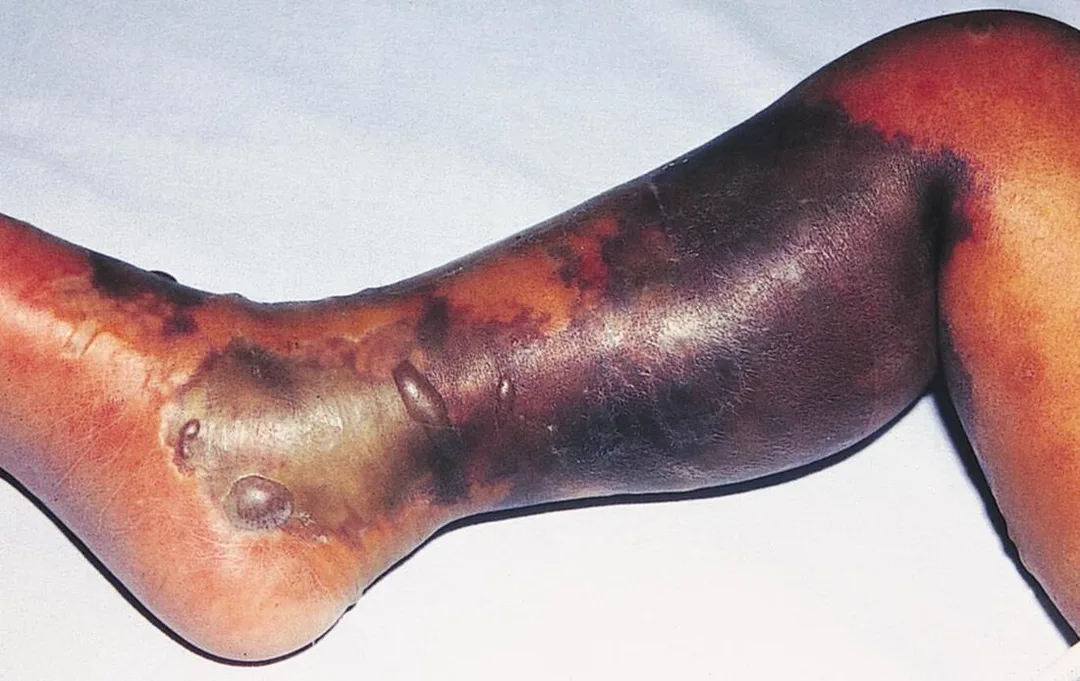
Necrotizing Fasciitis
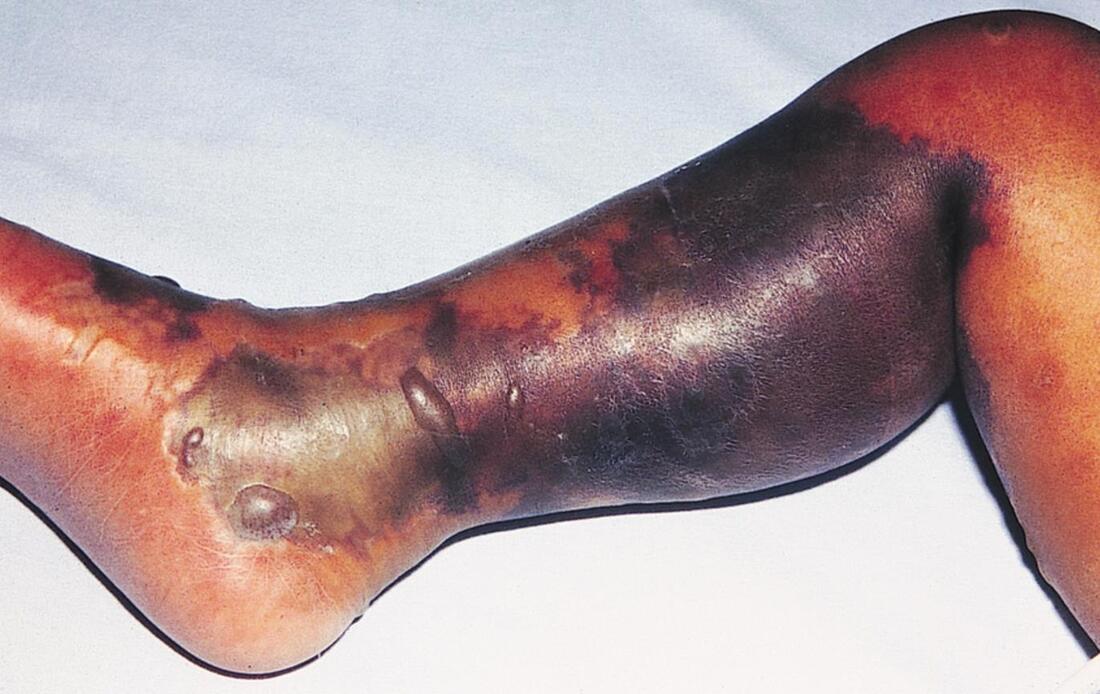
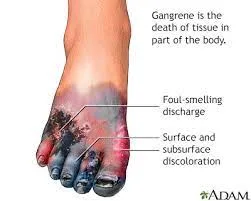
Gangrene
0 Comments
