- Published on
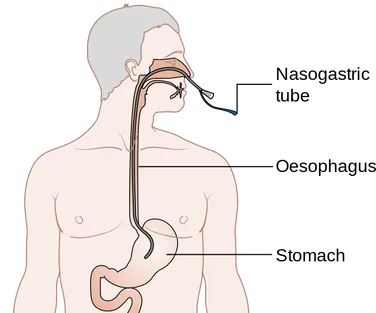
Clinical Procedures - Nasogastric Tube Insertion
Indications
• Feeding in patients with poor swallow (e.g. post cerebrovascular accident)
• Lavage of gastric contents in poisoning
• Postoperative for stomach decompression
• Bowel obstruction.
Contraindications
• Oesophageal stricture, obstructing tumour
• Tracheo-oesophageal fistula
• Achalasia cardia
• Deviated nasal septum
• Fractured base of skull
Risks
• Malpositioning in a lung
• Trauma to the nasal and/or pharyngeal cavities
• Perforation of esophagus.
Procedure Tips
•Medications such as proton pump inhibitors and acid suppressing drugs may elevate the pH of the aspirate giving a 'false-negative result.
If in doubt, request a chest radiograph before using
• Low pH-fluid may also be aspirated from the lung in cases of aspirated stomach contents. If in doubt, request a chest radiograph before using
• Chest radiography should be performed routinely in high-risk patients (those that are unconscious, intubated or have poor swallow)
• The absence of cough reflex does not rule out misplacement of the tube in the airways
• Auscultation for gurgling in the stomach is not a recommended method for confirming position.
Equipment
• Lubricant (e.g. Aquagel®)
• pH-testing strips
• 50mL syringe
• Gallipots
• Dressing pack
• Nasogastric tube (12-18 French size)
• Hypoallergenic tape
• Sterile gauze
• Gloves
• Disposable bowl.
Procedure
• Introduce yourself, confirm the patient's identity
• Explain the procedure to the patient, stating that it may be uncomfortable and can cause gagging, which is transient
• Make sure that the patient understands the procedure and agree a signal to be made if patient wants to you stop (e.g. raising hand)
• To estimate the length of the tube required, measure the distance from the bridge of the nose to the tip of the earlobe and then to the xiphoid process
• Position the patient semi-upright:
• If unconscious, place the patient on their side
• Check the patency of the nostrils and select a suitable side
• Wash hands and put on gloves
• Unwrap the tube and lubricate the tip by wiping it through a blob of lubricating gel
• Insert the tip of the tube in the nostril and advance the tube horizontally along the floor of the nasal cavity in a backward and downward direction
• As the tube passes into the nasopharynx, ask the patient to swallow if they are able to do so:
• Using a cup of water and straw often helps here
• If there is any obstruction felt during advancement, withdraw and try in the other nostril
• © Watch for any signs of distress; namely cough or cyanosis and remove the tube immediately if any of these occur
• Once the tube has reached the measured distance, secure it in place with the tape:
• The gastro-oesophageal junction is generally 38-42cm from the nostril so advancement of the tube 55-60cm from the nostril usually positions the nasogastric tube tip within the stomach.
• Aspirate a sample of fluid using a syringe
• Place the aspirate on a pH-testing strip:
• D A pH of 5.5 or less suggests that the tube is in the
stomach
• If no aspirate obtained, change position and try again. If still unsuccessful, perform chest radiography to confirm position:
• Be sure to leave the internal wire in the tube if you are sending the patient to x-ray. The tube itself is not radio-opaque and will be invisible on the resultant image
• Once satisfied that the tube lies within the stomach, remove the inner wire and secure the tube to the tip of the nose:
• It is sometimes helpful to curve the remainder of the tube towards the ear and secure to the cheek also.
Documentation
• Date, time, indication, informed consent obtained
• Size of tube inserted
• Length of tube internally (there are markings on the tube:
• This is important to allow other staff to assess whether the tube has moved in or out since insertion
• Method by which correct placement was confirmed
• Any immediate complications
• Signature, printed name, and contact details.
Indications
• Feeding in patients with poor swallow (e.g. post cerebrovascular accident)
• Lavage of gastric contents in poisoning
• Postoperative for stomach decompression
• Bowel obstruction.
Contraindications
• Oesophageal stricture, obstructing tumour
• Tracheo-oesophageal fistula
• Achalasia cardia
• Deviated nasal septum
• Fractured base of skull
Risks
• Malpositioning in a lung
• Trauma to the nasal and/or pharyngeal cavities
• Perforation of esophagus.
Procedure Tips
•Medications such as proton pump inhibitors and acid suppressing drugs may elevate the pH of the aspirate giving a 'false-negative result.
If in doubt, request a chest radiograph before using
• Low pH-fluid may also be aspirated from the lung in cases of aspirated stomach contents. If in doubt, request a chest radiograph before using
• Chest radiography should be performed routinely in high-risk patients (those that are unconscious, intubated or have poor swallow)
• The absence of cough reflex does not rule out misplacement of the tube in the airways
• Auscultation for gurgling in the stomach is not a recommended method for confirming position.
Equipment
• Lubricant (e.g. Aquagel®)
• pH-testing strips
• 50mL syringe
• Gallipots
• Dressing pack
• Nasogastric tube (12-18 French size)
• Hypoallergenic tape
• Sterile gauze
• Gloves
• Disposable bowl.
Procedure
• Introduce yourself, confirm the patient's identity
• Explain the procedure to the patient, stating that it may be uncomfortable and can cause gagging, which is transient
• Make sure that the patient understands the procedure and agree a signal to be made if patient wants to you stop (e.g. raising hand)
• To estimate the length of the tube required, measure the distance from the bridge of the nose to the tip of the earlobe and then to the xiphoid process
• Position the patient semi-upright:
• If unconscious, place the patient on their side
• Check the patency of the nostrils and select a suitable side
• Wash hands and put on gloves
• Unwrap the tube and lubricate the tip by wiping it through a blob of lubricating gel
• Insert the tip of the tube in the nostril and advance the tube horizontally along the floor of the nasal cavity in a backward and downward direction
• As the tube passes into the nasopharynx, ask the patient to swallow if they are able to do so:
• Using a cup of water and straw often helps here
• If there is any obstruction felt during advancement, withdraw and try in the other nostril
• © Watch for any signs of distress; namely cough or cyanosis and remove the tube immediately if any of these occur
• Once the tube has reached the measured distance, secure it in place with the tape:
• The gastro-oesophageal junction is generally 38-42cm from the nostril so advancement of the tube 55-60cm from the nostril usually positions the nasogastric tube tip within the stomach.
• Aspirate a sample of fluid using a syringe
• Place the aspirate on a pH-testing strip:
• D A pH of 5.5 or less suggests that the tube is in the
stomach
• If no aspirate obtained, change position and try again. If still unsuccessful, perform chest radiography to confirm position:
• Be sure to leave the internal wire in the tube if you are sending the patient to x-ray. The tube itself is not radio-opaque and will be invisible on the resultant image
• Once satisfied that the tube lies within the stomach, remove the inner wire and secure the tube to the tip of the nose:
• It is sometimes helpful to curve the remainder of the tube towards the ear and secure to the cheek also.
Documentation
• Date, time, indication, informed consent obtained
• Size of tube inserted
• Length of tube internally (there are markings on the tube:
• This is important to allow other staff to assess whether the tube has moved in or out since insertion
• Method by which correct placement was confirmed
• Any immediate complications
• Signature, printed name, and contact details.
0 Comments
