- Published on
Dermatology - Scales
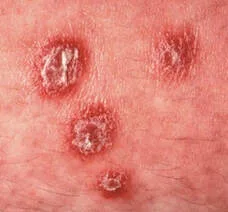
The term "squames" is derived from the Latin word meaning "scale." A skin condition characterized by the presence of raised lesions with scales is referred to as a papulosquamous exanthem. Scales are thin layers of the outermost layer of the skin, known as the stratum corneum.
They can vary in size, ranging from huge structures like membranes to minute particles like dust. They can also be described as pityriasiform, which means resembling bran, and can either be adhering or loose.
Scales can manifest either independently or superimposed on other types of lesions.
Palpation of scales is optional.
Scales can have either well-defined or indistinct boundaries.
The term "squames" is derived from the Latin word meaning "scale." A skin condition characterized by the presence of raised lesions with scales is referred to as a papulosquamous exanthem. Scales are thin layers of the outermost layer of the skin, known as the stratum corneum.
They can vary in size, ranging from huge structures like membranes to minute particles like dust. They can also be described as pityriasiform, which means resembling bran, and can either be adhering or loose.
Scales can manifest either independently or superimposed on other types of lesions.
Palpation of scales is optional.
Scales can have either well-defined or indistinct boundaries.
0 Comments
