- Published on
Infectious Diseases and Microbiology - Diphyllobothriasis ( Diphyllobothrium latum)
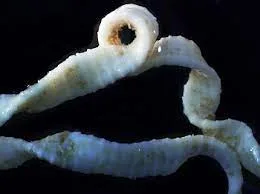
Diphyllobothrium latum is a type of cestode, which is a segmented flatworm. It is commonly known as the broad fish tapeworm.
The strobila consists of one or many hermaphroditic proglottids.
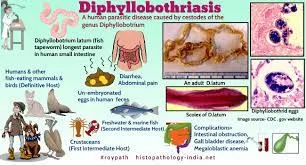
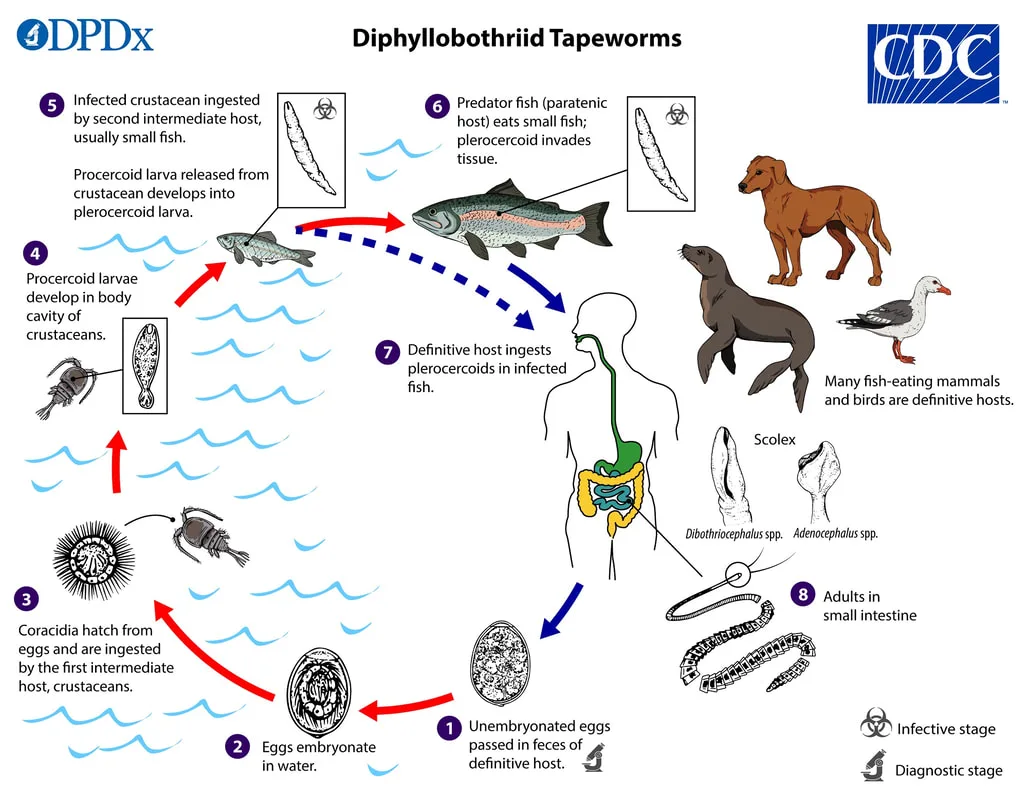
Humans are the primary host. D latum utilizes two consecutive intermediate hosts: a freshwater copepod known as Cyclops and a freshwater fish. Infection occurs as a consequence of consuming freshwater fish that is undercooked, pickled, or uncooked.
The majority of infections do not show any symptoms; nevertheless, when there is a scarcity of vitamin B12, it can cause a shortage in B12, leading to megaloblastic anemia and a range of neurological symptoms.
Adult tapeworms maintain their attachment to the intestine through the scolex and can reach a length of up to 13 meters.
The eggs of D latum have an elongated shape and possess a lidlike operculum. The proglottids exhibit a greater width compared to their length, featuring a uterine branch pattern arranged in a rosette formation.
Praziquantel is administered for therapeutic purposes. Prevention include refraining from consuming undercooked fish and implementing precautions to avoid contamination of freshwater lakes by human feces.
Diphyllobothrium latum is a type of cestode, which is a segmented flatworm. It is commonly known as the broad fish tapeworm.
The strobila consists of one or many hermaphroditic proglottids.
Humans are the primary host. D latum utilizes two consecutive intermediate hosts: a freshwater copepod known as Cyclops and a freshwater fish. Infection occurs as a consequence of consuming freshwater fish that is undercooked, pickled, or uncooked.
The majority of infections do not show any symptoms; nevertheless, when there is a scarcity of vitamin B12, it can cause a shortage in B12, leading to megaloblastic anemia and a range of neurological symptoms.
Adult tapeworms maintain their attachment to the intestine through the scolex and can reach a length of up to 13 meters.
The eggs of D latum have an elongated shape and possess a lidlike operculum. The proglottids exhibit a greater width compared to their length, featuring a uterine branch pattern arranged in a rosette formation.
Praziquantel is administered for therapeutic purposes. Prevention include refraining from consuming undercooked fish and implementing precautions to avoid contamination of freshwater lakes by human feces.
0 Comments
