- Published on
Pathology - Acute Appendicitis
Resulting from blockage of the appendix by a fecalith, irritation, foreign object, or tumor.
The highest occurrence is often observed between the ages of 10 and 30.
Study of diseases
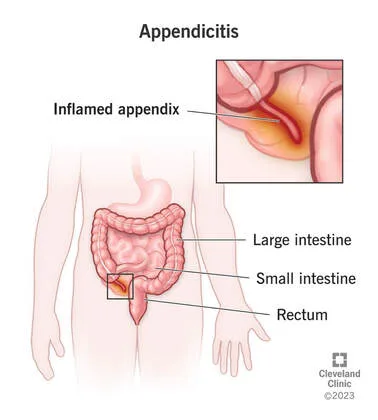
Macroscopic observation: Inflamed appendix with fibrin deposits
Microscopic findings show a neutrophilic infiltrate spreading to the muscularis with abscess development. Ulcerations: engorged blood vessels
Initial diffuse abdominal discomfort shifting to the right lower quadrant, accompanied by fever, loss of appetite, nausea, vomiting, psoas sign, and obturator sign.
Complications may involve gangrene and perforation, which can result in peritonitis.
Laboratory results: Increased white blood cell count
Surgical procedure: Appendectomy.
Appendicitis is the most prevalent abdominal surgical emergency, impacting 10% of the population.
Resulting from blockage of the appendix by a fecalith, irritation, foreign object, or tumor.
The highest occurrence is often observed between the ages of 10 and 30.
Study of diseases
Macroscopic observation: Inflamed appendix with fibrin deposits
Microscopic findings show a neutrophilic infiltrate spreading to the muscularis with abscess development. Ulcerations: engorged blood vessels
Initial diffuse abdominal discomfort shifting to the right lower quadrant, accompanied by fever, loss of appetite, nausea, vomiting, psoas sign, and obturator sign.
Complications may involve gangrene and perforation, which can result in peritonitis.
Laboratory results: Increased white blood cell count
Surgical procedure: Appendectomy.
Appendicitis is the most prevalent abdominal surgical emergency, impacting 10% of the population.
0 Comments
