- Published on
Pathology - Biliary Cirrhosis
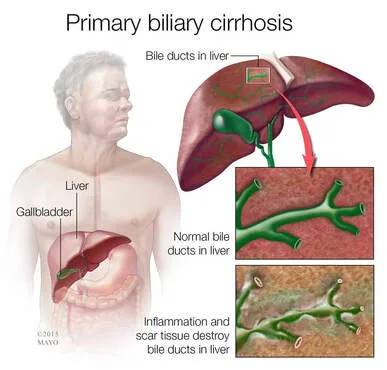
Primary biliary cirrhosis (PBC) is an autoimmune illness that typically affects women between the ages of 40 and 60. It can coexist with other autoimmune disorders such as Sjogren syndrome, thyroiditis, and rheumatoid arthritis.
SBC, or secondary biliary cirrhosis: caused by biliary blockage outside of the liver
Pathology
PBC: Gross: liver begins to turn green gradually. Microscopic factors include lymphocyte infiltration in the portal system, periportal granuloma development that destroys bile ducts, and the final destruction of hepatic parenchyma that results in hepatic cirrhosis.
SBC: Vellow-green liver, disgusting. Microscopic features include bile stasis, bile lakes (an buildup of bile in the hepatic parenchyma), fibrous septa, and variations in bile duct size.
Pathophysiology: a bacterial infection of the intrahepatic ducts known as ascending cholangitis can exacerbate extrahepatic biliary blockage by raising intrahepatic duct pressure, which in turn causes ductal damage and ultimately fibrosis.
Clinical Signs and Symptoms
severe obstructive jaundice, xanthomas, pruritus, weariness, hepatosplenomegaly, and ultimately portal hypertension-associated liver failure.
Results from the lab: elevated bilirubin levels, elevated ALP, hypercholesterolemia, and antimitochondrial antibodies (PBC).
Treatment
Vitamin supplements, cholestyramine for itching, ursodeoxycholic acid, and live transplants in cases of severe illness.
Primary biliary cirrhosis (PBC) is an autoimmune illness that typically affects women between the ages of 40 and 60. It can coexist with other autoimmune disorders such as Sjogren syndrome, thyroiditis, and rheumatoid arthritis.
SBC, or secondary biliary cirrhosis: caused by biliary blockage outside of the liver
Pathology
PBC: Gross: liver begins to turn green gradually. Microscopic factors include lymphocyte infiltration in the portal system, periportal granuloma development that destroys bile ducts, and the final destruction of hepatic parenchyma that results in hepatic cirrhosis.
SBC: Vellow-green liver, disgusting. Microscopic features include bile stasis, bile lakes (an buildup of bile in the hepatic parenchyma), fibrous septa, and variations in bile duct size.
Pathophysiology: a bacterial infection of the intrahepatic ducts known as ascending cholangitis can exacerbate extrahepatic biliary blockage by raising intrahepatic duct pressure, which in turn causes ductal damage and ultimately fibrosis.
Clinical Signs and Symptoms
severe obstructive jaundice, xanthomas, pruritus, weariness, hepatosplenomegaly, and ultimately portal hypertension-associated liver failure.
Results from the lab: elevated bilirubin levels, elevated ALP, hypercholesterolemia, and antimitochondrial antibodies (PBC).
Treatment
Vitamin supplements, cholestyramine for itching, ursodeoxycholic acid, and live transplants in cases of severe illness.
0 Comments
