- Published on
Pathology - Conn Syndrome
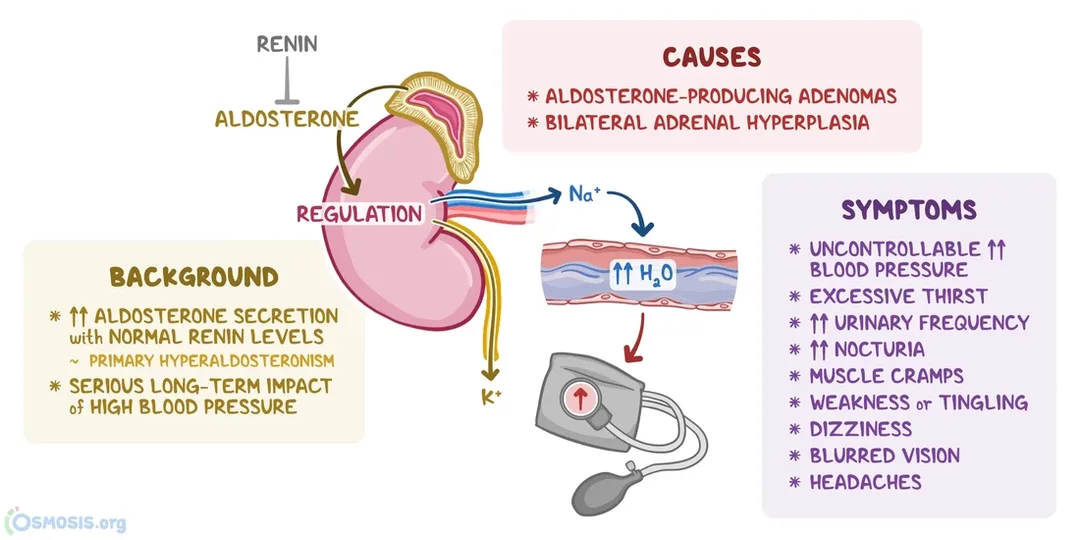
Resulting from aldosterone-secreting adrenocortical adenoma or hyperplasia.
Adrenal cortex: An adenoma is a single enclosed growth made up of consistent cortical cells that are packed with vesicles holding lipids.
Hyperplasia: increased cell growth in the zona glomerulosa.
Symptoms and signs
Hypertension, muscle weakness occasionally accompanied by tetany, headache, excessive urination, and increased thirst.
Laboratory results: Metabolic alkalosis, low serum potassium, reduced renin levels, elevated aldosterone levels.
Therapies
Adrenalectomy is recommended for unilateral adenoma, whereas spironolactone, a potassium-sparing diuretic, is prescribed for bilateral adrenal hyperplasia. Antihypertensive treatment should be used as necessary.
Secondary hyperaldosteronism is linked to conditions that cause the kidneys to detect a low effective circulation volume, such as renal ischemia, chronic renal failure, hepatic cirrhosis, congestive heart failure, or nephrotic syndrome. It is linked to elevated aldosterone levels caused by high renin levels.
Resulting from aldosterone-secreting adrenocortical adenoma or hyperplasia.
Adrenal cortex: An adenoma is a single enclosed growth made up of consistent cortical cells that are packed with vesicles holding lipids.
Hyperplasia: increased cell growth in the zona glomerulosa.
Symptoms and signs
Hypertension, muscle weakness occasionally accompanied by tetany, headache, excessive urination, and increased thirst.
Laboratory results: Metabolic alkalosis, low serum potassium, reduced renin levels, elevated aldosterone levels.
Therapies
Adrenalectomy is recommended for unilateral adenoma, whereas spironolactone, a potassium-sparing diuretic, is prescribed for bilateral adrenal hyperplasia. Antihypertensive treatment should be used as necessary.
Secondary hyperaldosteronism is linked to conditions that cause the kidneys to detect a low effective circulation volume, such as renal ischemia, chronic renal failure, hepatic cirrhosis, congestive heart failure, or nephrotic syndrome. It is linked to elevated aldosterone levels caused by high renin levels.
0 Comments
