- Published on
Pathology - Syndrome of Inappropriate ADH ( SIADH)
Syndrome of Inappropriate Antidiuretic Hormone (SIADH) can be caused by pulmonary disorders (such as COPD and pneumonia), intracranial issues (like trauma, hemorrhage, and stroke), certain medications (such as antipsychotics and chemotherapy), or pain. It can also result from abnormal ADH production by tumors like small-cell bronchogenic carcinoma.
Pathology
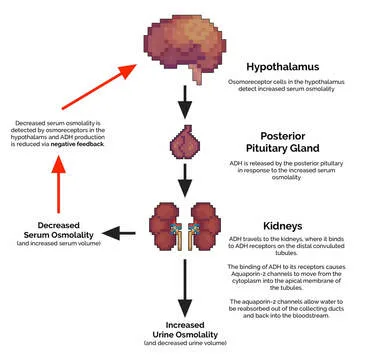
Heightened ADH secretion leads to water retention in the collecting duct of the nephron.
Water retention results in the dilution of serum electrolytes, particularly sodium, leading to lower levels of electrolytes and serum osmolality.
Clinical Symptoms and Signs
Fatigue and confusion resulting from low levels of sodium in the blood and normal fluid volume.
Laboratory results: Low sodium levels, reduced serum osmolality, elevated urine osmolality.
Treatment includes fluid restriction, demeclocycline, and hypertonic saline for severe hyponatremia.
Syndrome of Inappropriate Antidiuretic Hormone (SIADH) can be caused by pulmonary disorders (such as COPD and pneumonia), intracranial issues (like trauma, hemorrhage, and stroke), certain medications (such as antipsychotics and chemotherapy), or pain. It can also result from abnormal ADH production by tumors like small-cell bronchogenic carcinoma.
Pathology
Heightened ADH secretion leads to water retention in the collecting duct of the nephron.
Water retention results in the dilution of serum electrolytes, particularly sodium, leading to lower levels of electrolytes and serum osmolality.
Clinical Symptoms and Signs
Fatigue and confusion resulting from low levels of sodium in the blood and normal fluid volume.
Laboratory results: Low sodium levels, reduced serum osmolality, elevated urine osmolality.
Treatment includes fluid restriction, demeclocycline, and hypertonic saline for severe hyponatremia.
0 Comments
