- Published on
Surgery - Cataracts
Introduction
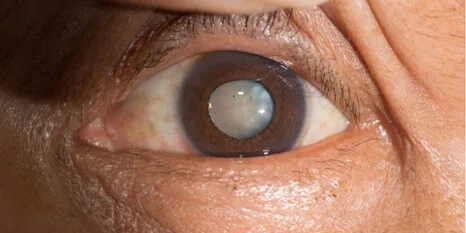
Opacification of the ocular lens.
Etiology
The majority of occurrences are age-related idiopathic cataracts, or "senile cataracts."
Among the many secondary reasons are the following:
Local: Intraocular tumors, uveitis, and prior eye trauma.
Systemic conditions include diabetes, myotonic dystrophy, X-ray and UV radiation, medications (steroids), skin conditions (atopic dermatitis, scleroderma), metabolic abnormalities (galactosaemia, hypocalcaemia, Wilson's disease), and genetic syndromes (Down's).
Congenital: Rubella syndrome in children.
Epidemiology
primary global cause of curable blindness. Age-related increases in cataracts, which impair vision, affect 30% of those over 65 in one or both eyes.
History
gradual, painless blindness that occurs.
glare from bright lights: In strong light, eyesight might get worse (particularly if the center lens is opacified).
Some people may see haloes surrounding lights and suffer from monocular diplopia.
Some people may discover that they have "lens convergent power" (nuclear sclerotic cataract) and can read without glasses.
Nystagmus or amblyopia may occur in babies.
Examination
blurry lens look and loss of red reflex. less sharpness in the eyes.
Investigation
In order to choose the best intraocular lens (IOL) implant, biometry is necessary.
Others are superfluous unless they happen early in life or are connected to a systemic illness.
Management
To prevent amblyopia, congenital cataracts need to be treated as away.
The impact of the cataracts on the patient's life and vision will determine whether or not surgery is necessary.
Operative: It is therapeutic to do phacoemulsification (with an ultrasonic probe), aspirate the lens material, and then install the intraocular lens implant. Particular side effects include endophthalmitis, vitreous humour loss, and posterior capsule opacification. usually performed as day surgery under local anesthesia. Steroid drops (for inflammation), antibiotic drops (for infection prophylaxis), avoiding intense exercise, and ocular trauma should all be part of the post-operative treatment.
Complications
None other from a lower standard of living due to diminished visual acuity.
Prognosis
good in treating cataracts brought on by aging.
Introduction
Opacification of the ocular lens.
Etiology
The majority of occurrences are age-related idiopathic cataracts, or "senile cataracts."
Among the many secondary reasons are the following:
Local: Intraocular tumors, uveitis, and prior eye trauma.
Systemic conditions include diabetes, myotonic dystrophy, X-ray and UV radiation, medications (steroids), skin conditions (atopic dermatitis, scleroderma), metabolic abnormalities (galactosaemia, hypocalcaemia, Wilson's disease), and genetic syndromes (Down's).
Congenital: Rubella syndrome in children.
Epidemiology
primary global cause of curable blindness. Age-related increases in cataracts, which impair vision, affect 30% of those over 65 in one or both eyes.
History
gradual, painless blindness that occurs.
glare from bright lights: In strong light, eyesight might get worse (particularly if the center lens is opacified).
Some people may see haloes surrounding lights and suffer from monocular diplopia.
Some people may discover that they have "lens convergent power" (nuclear sclerotic cataract) and can read without glasses.
Nystagmus or amblyopia may occur in babies.
Examination
blurry lens look and loss of red reflex. less sharpness in the eyes.
Investigation
In order to choose the best intraocular lens (IOL) implant, biometry is necessary.
Others are superfluous unless they happen early in life or are connected to a systemic illness.
Management
To prevent amblyopia, congenital cataracts need to be treated as away.
The impact of the cataracts on the patient's life and vision will determine whether or not surgery is necessary.
Operative: It is therapeutic to do phacoemulsification (with an ultrasonic probe), aspirate the lens material, and then install the intraocular lens implant. Particular side effects include endophthalmitis, vitreous humour loss, and posterior capsule opacification. usually performed as day surgery under local anesthesia. Steroid drops (for inflammation), antibiotic drops (for infection prophylaxis), avoiding intense exercise, and ocular trauma should all be part of the post-operative treatment.
Complications
None other from a lower standard of living due to diminished visual acuity.
Prognosis
good in treating cataracts brought on by aging.
0 Comments
